Laws & Rights
What the $0 NFA Tax and Brace Changes Really Mean for Short-Barreled Rifle Ownership
What the $0 NFA tax, brace rule changes, and recent court cases really mean for short-barreled rifle ownership
What Is Short-Barreled Rifle Ownership Under Current Federal Law?
Short-barreled rifle ownership remains tightly regulated under the National Firearms Act (NFA), even after the $0 tax change effective January 1, 2026. A short-barreled rifle (SBR) is still an NFA firearm requiring registration, prior ATF approval, and compliance with federal, state, and local laws. The $0 tax removes the fee but does not eliminate the registration requirement or make SBRs unrestricted like standard rifles.
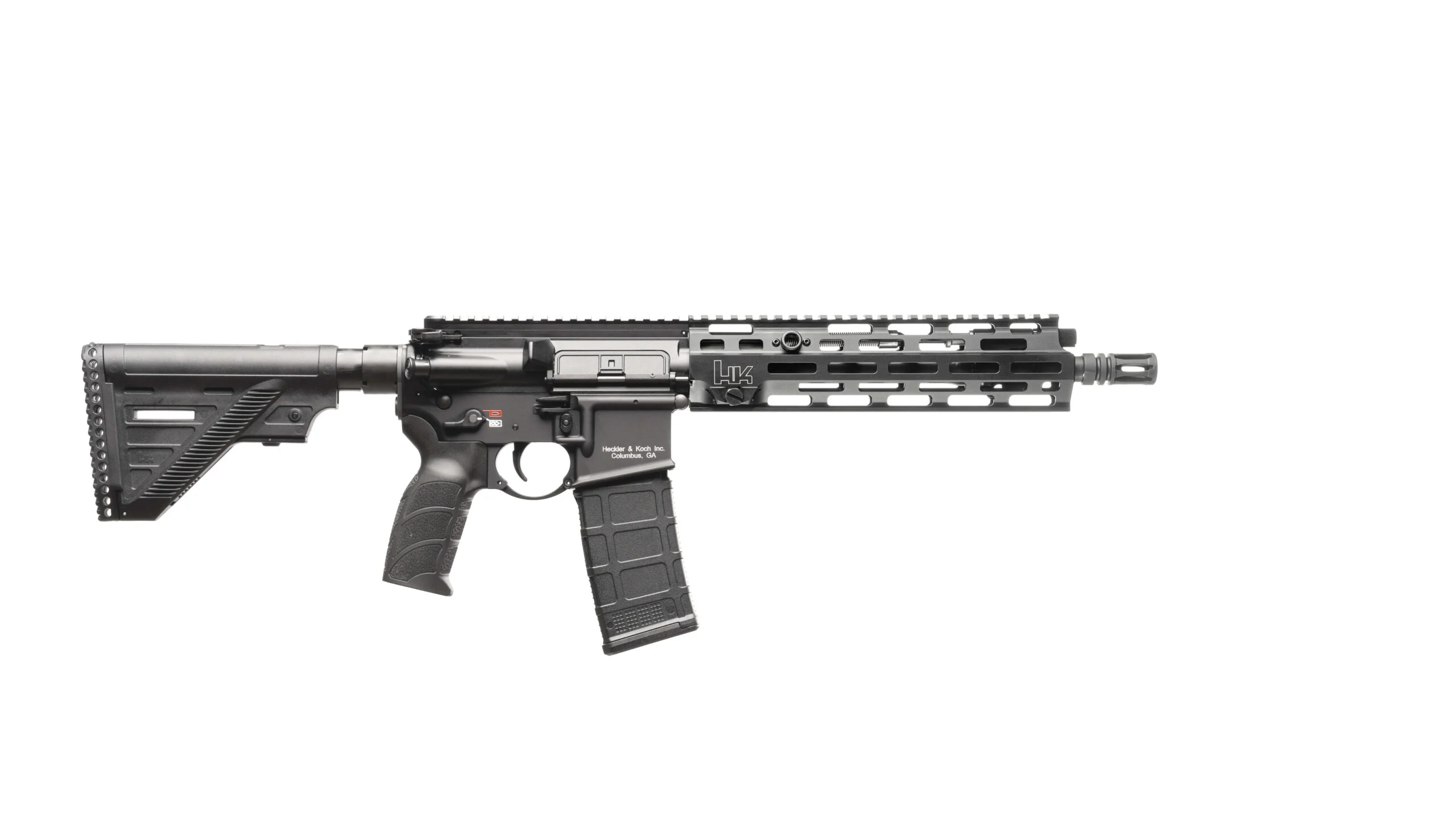
A short-barreled rifle (SBR) is a rifle with a barrel under 16 inches or overall length under 26 inches, classified as an NFA firearm. Ownership requires ATF registration via Form 1 (make) or Form 4 (transfer), fingerprints, photos, background check, and approval before possession. The $0 tax (effective 2026) applies to SBRs, but registration and state restrictions remain mandatory. Unregistered possession is a federal crime.
Key Takeaway: The $0 NFA tax for short-barreled rifle ownership lowers costs but does not remove the core federal requirements—prior approval, registration in the NFA database, and full compliance with all layers of law to avoid serious penalties.
Quick Compliance Directive: Never possess or build a short-barreled rifle without approved ATF registration. Verify your state allows SBRs, submit fingerprints and photos, wait for approval, and keep digital/physical copies of your approved form at all times. Non-compliance risks federal felony charges.
When folks ask, “Can anyone own an SBR now?” they’re usually reacting to the $0 NFA tax for short-barreled rifles and headlines about the stabilizing brace rule being set aside. There’s a lot of half-right information floating around, and with NFA items, “half-right” can still land you in serious legal trouble.
In plain language, short-barreled rifle ownership involves one of the most tightly regulated firearm categories under federal law.1 The $0 tax does not mean “no rules,” and “anyone” absolutely cannot just go buy or build an SBR like an ordinary rifle. Whether you can own one depends on federal law, personal eligibility, and state laws.
In this guide, I’ll walk you through what an SBR is under federal law, what changed, what stayed the same, and what that means for responsible citizens curious about short-barreled rifle ownership. My goal is simple: help you stay solidly on the right side of the law while exercising your rights. Responsible ownership, confident rights.
Background: What Counts as an SBR in Short-Barreled Rifle Ownership
The Federal Definition in Everyday Language
Under the National Firearms Act (NFA), a short-barreled rifle is defined as:
- A rifle designed to be fired from the shoulder
- That uses fixed cartridges
- With a barrel under 16 inches or
- A weapon made from a rifle with an overall length under 26 inches
Those details come straight from federal statute.1 An AR-15 with a 7.5-inch barrel, for example, qualifies as an SBR.1 13
Once it meets this definition, it becomes an NFA firearm rather than a standard Title I rifle.
Why NFA Status Matters for Short-Barreled Rifle Ownership
Ordinary rifles follow Gun Control Act rules (Form 4473, background check). SBRs add NFA layers:
Possessing an unregistered SBR is a federal crime.2 13
How NFA Rules Layer on Top of General Gun Laws
Think layers:
- Base: General firearm law – Background checks, age limits, prohibited persons.
- NFA layer: Extra requirements for SBRs, including prior approval and registration.
- State/local layer: May add restrictions or bans.
Focus here is the NFA layer for short-barreled rifle ownership, but state rules apply on top. INSERT INTERNAL LINK HERE: Related guide to state firearm restrictions.
Current Status: Changes and Constants in Short-Barreled Rifle Ownership
Key areas: definitions, taxes/process, brace rules, and court cases.
What Has Not Changed for Short-Barreled Rifle Ownership
- SBR definition unchanged.1
- Unregistered SBRs remain federal crime.2 Upheld in recent cases.13
- Prior ATF approval required. Form 4 (transfer) or Form 1 (make), with approval before possession.
The $0 NFA Tax Change for Short-Barreled Rifle Ownership
As of January 1, 2026, Congress set the making and transfer taxes to $0 for SBRs (excluding machine guns/destructive devices).7 8
- Still file NFA form.
- Still await ATF approval.
- Approved form shows $0 tax.
Registration and approval system remain intact.
Stabilizing Brace Rule Status
The 2023 ATF brace rule (2021R-08F) that reclassified many braced pistols as SBRs was set aside nationwide and is not enforced. Underlying SBR definition persists, but current enforcement reverts to pre-rule guidance.
Proceed cautiously with braced firearms; consult legal advice for edge cases. INSERT INTERNAL LINK HERE: Guide to AR pistol vs SBR distinctions.
Court Rulings on Short-Barreled Rifle Ownership
The Seventh Circuit in United States v. Rush upheld NFA SBR registration as constitutional post-Bruen.13 Supreme Court denied cert in December 2025.14
Paths to Legal Short-Barreled Rifle Ownership
| Path | Form | Use Case | Steps |
|---|---|---|---|
| Buy Existing SBR | Form 4 | Transfer from dealer/individual | Submit Form 4, fingerprints/photos, background check, await approval, take possession. |
| Make Your Own | Form 1 | Convert/build SBR | Submit Form 1, fingerprints/photos, await approval, then configure after approval. |
Do not possess or make until approved. State laws can block even if federal ok.16
Practical Implications for Short-Barreled Rifle Owners
“Anyone” Still Cannot Own an SBR
Only non-prohibited persons qualify. $0 tax changes nothing about eligibility.
$0 Tax Improves Access, Not Regulation
Lowers cost but keeps registration, checks, approval.7
State Laws Remain Critical
Some ban SBRs; others allow with NFA compliance.SBR Legal States Overview Check ATF guide and state statutes.16 INSERT INTERNAL LINK HERE: State-by-state NFA guide.
Storage, Paperwork, and Mindset
- Storage: Secure to prevent unauthorized access.
- Paperwork: Keep approved forms accessible.
- Mindset: High-scrutiny item—verify changes/travel/loans.
Expert Perspectives on Short-Barreled Rifle Ownership
Facts vs analysis:
Court Holdings (Facts)
Interpretations (Analysis)
Analysis (not legal advice): $0 tax seen as progress by some, but registration persists. NFA enforcement continues.
Future Outlook for Short-Barreled Rifle Ownership Rules
Stable: SBRs remain NFA, $0 tax unless changed, registration enforced.
Uncertainties: Future laws, brace designs, court challenges. Treat current rules as binding. INSERT INTERNAL LINK HERE: Updates on NFA reform proposals.
FAQs About Short-Barreled Rifle Ownership Today
Can anyone own a short-barreled rifle now that the NFA tax is $0?
No — short-barreled rifle ownership is not open to everyone, even with the $0 NFA tax effective January 1, 2026. You must still be legally eligible to possess firearms (not a prohibited person under federal, state, or local law), obtain prior ATF approval, register the SBR in the National Firearms Registration and Transfer Record, and live in a state that permits SBRs. If any of these requirements fail, ownership is not allowed regardless of the tax change.
Is owning a short-barreled rifle the same as buying a regular rifle?
No — short-barreled rifle ownership involves significantly more regulation than a standard Title I rifle. While a regular rifle usually requires only a Form 4473 and background check, an SBR is an NFA firearm. You must submit an ATF Form 1 (to make) or Form 4 (to transfer), provide fingerprints and photos, pass a background check, wait for approval, and have the firearm registered to you before possession. The $0 tax lowers cost but does not remove these extra steps or the registration requirement.
Does attaching a stabilizing brace to a pistol make it a short-barreled rifle?
No, not automatically under current enforcement. The 2023 ATF stabilizing brace rule (2021R-08F), which would have reclassified many braced pistols as SBRs subject to NFA rules, was vacated nationwide by federal courts and is no longer enforced. Classification now falls back to the statutory NFA definition: a firearm is an SBR if it has a barrel under 16 inches or overall length under 26 inches and is designed to be fired from the shoulder. Braced firearms are evaluated case-by-case. For close calls, review current ATF guidance or consult a qualified attorney.
Do recent state law changes override federal requirements for short-barreled rifle ownership?
No — state law changes do not override federal requirements for short-barreled rifle ownership. Federal NFA rules (registration, prior ATF approval, prohibited-person restrictions) always apply. Some states have loosened their own penalties or treatment of short-barreled firearms, but ATF will not approve an application if state or local law prohibits possession. You must comply with both federal NFA requirements and your state’s laws. Always verify your state’s current statutes and ATF’s State Laws and Published Ordinances guide.
Is a gun trust required to own a short-barreled rifle?
No — a gun trust is not required to own a short-barreled rifle under federal law. ATF allows individuals, trusts, and certain legal entities to apply for NFA firearms like SBRs via Form 1 or Form 4. Using a trust is optional and can offer benefits such as easier inheritance or multiple-user access, but it does not bypass any NFA registration, approval, or compliance steps. Whether a trust makes sense for your situation is a personal planning decision — discuss it with an attorney familiar with firearms law.
What are the safe first steps if I’m considering short-barreled rifle ownership?
If you are exploring short-barreled rifle ownership, follow these safe, low-risk first steps before taking any action:
- Study the federal definition of a short-barreled rifle so you clearly understand what configurations fall under NFA rules.
- Check your state law using current statutes or ATF’s State Laws and Published Ordinances – Firearms guide to confirm SBRs are permitted where you live.
- Talk with a reputable NFA-experienced dealer to learn about real-world wait times, common paperwork issues, and the approval process.
- Assess your home storage plan to ensure you can securely store an SBR and prevent unauthorized access.
Learn first and proceed carefully — compliance is non-negotiable for legal short-barreled rifle ownership.
External Resources and Next Steps
If you want to go deeper into the official materials and recent cases, these are strong starting points:
- The federal definition section for NFA firearms and rifles in the U.S. Code, which explains exactly when a rifle becomes an SBR.
26 U.S.C. § 5845 – Definitions (including SBRs) - The current NFA transfer tax provisions, showing the $0 tax rate for SBRs while maintaining the registration framework.
26 U.S.C. § 5811 – Transfer tax (as amended) - ATF’s National Firearms Act overview, covering the history, requirements, and key provisions.
ATF – National Firearms Act (overview) - ATF’s National Firearms Act Division page, with details on processing applications and the NFRTR registry.
ATF – National Firearms Act Division - ATF guidance on how to obtain an NFA firearm, including Form 1 (make) and Form 4 (transfer) processes.
ATF Firearms Questions and Answers (includes NFA application info) - The Seventh Circuit decision in United States v. Rush, upholding NFA registration requirements for SBRs.
United States v. Rush, No. 23-3256 (7th Cir. 2025) - ATF’s State Laws and Published Ordinances – Firearms (36th Edition), the latest compilation of state-by-state firearms laws (updated January 2026).
ATF – State Laws and Published Ordinances – Firearms (36th Edition) - ATF page on Factoring Criteria for Firearms with Attached “Stabilizing Braces”, including current status of the vacated rule.
ATF – Factoring Criteria for Firearms with Attached Stabilizing Braces
From here, your best next step is to combine those official resources with a careful review of your state’s laws and, when in doubt, local legal counsel. Safety and freedom go hand in hand – and with NFA items like SBRs, that starts with knowing exactly where the legal lines are and staying well inside them.
Learn more about SBR and Silencer laws – NFA Unconstitutional: Jensen v. ATF Ends 91-Year Gun Tax