Fifth Circuit Suppressor Ruling: Silencers Are ‘Arms’ — but the Fight Isn’t Over
A federal appeals court has ruled that suppressors are “arms” protected by the Second Amendment. The Fifth Circuit suppressor ruling came down June 18 in United States v. Comeaux. It is the first time a federal circuit court has placed silencers squarely inside the text of the Second Amendment. And it lands just two weeks after a different court reached the opposite conclusion. That clash is what matters most. It gives the Supreme Court a clean reason to take up a question suppressor owners have asked for 91 years: does the Constitution protect the suppressors on the end of our rifles? (Updated June 25, 2026.)
Last updated: August 21, 2026 · Originally published June 25, 2026
Here is what the court held, why your conviction-affirming win is still a win, and the deadline-free fight that comes next.
What the Fifth Circuit suppressor ruling says
A unanimous three-judge panel held that suppressors are “arms” within the plain text of the Second Amendment. Writing for the court in the 11-page opinion (No. 24-30307), Judge Jerry E. Smith grounded the decision in the Bruen framework of text, history, and tradition and the definition of “bear arms” from Heller.
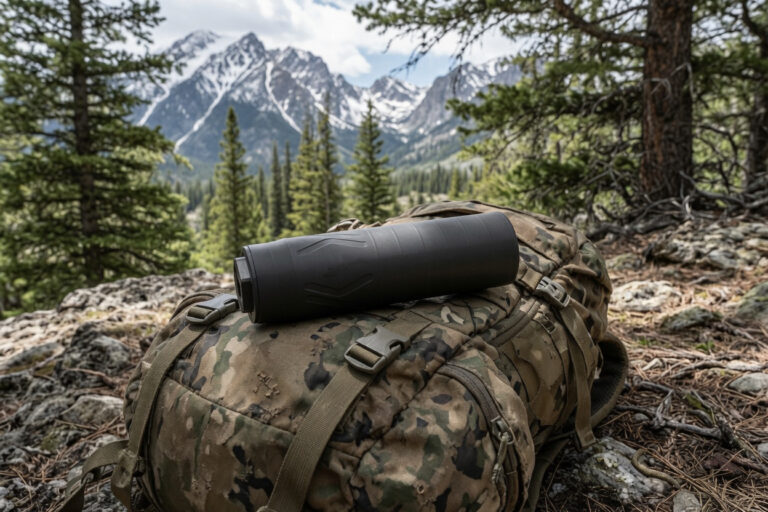
The panel pointed to what suppressors do for the shooter: “reduced loudness (and reduced risk of hearing loss), lower recoil from the firearm, elimination of muzzle blast, increased accuracy, and faster follow-up shots.” Those are the marks of a device that makes a firearm easier and safer to use — not a novelty, not a weapon of war, and not the assassin’s tool that 80 years of Hollywood has sold. The court treated the suppressor as part of the arm, and that single move is the breakthrough.
For the record, this is a question gun owners ask every week: are suppressors protected by the Second Amendment? In the Fifth Circuit, as of June 18, 2026, the answer is yes.

So why was the conviction still affirmed?
Because the man who brought the challenge was not the right messenger. Brennan James Comeaux was convicted of possessing unregistered suppressors under the National Firearms Act after sheriff’s deputies searched his home and he admitted making the devices himself. He never registered them. He never filed a Form 1.
Judge Smith drew the line plainly: “Though silencers are Second Amendment ‘Arms,’ because Comeaux has not alleged that the NFA’s shall-issue regime has been put toward abusive ends, he has not shown that § 5861(d) burdens his Second Amendment rights.” Translated: the NFA’s registration system is a “shall-issue” process — apply, pass the background check, get approved. The Court has already signaled in Bruen that shall-issue licensing survives constitutional scrutiny unless it is abused with lengthy delays, arbitrary denials, or prohibitive fees. Comeaux didn’t argue any of that. He just skipped the system. So his conviction stood.
Read it the right way. The precedent is the prize. A criminal defendant who made unregistered suppressors lost his appeal. But on the way to affirming his conviction, the court wrote a new rule into federal law: the suppressor itself is a protected arm. That holding outlives his case. The next lawful owner who challenges a real abuse of the system now has a circuit court on record. It says the very thing he wants to protect is, in fact, an “arm.”
The circuit split is the real headline
Two federal appeals courts looked at the same constitutional question two weeks apart and gave opposite answers. That is the engine that drives cases to the Supreme Court.
| Court | Case | Date | Holding |
|---|---|---|---|
| Fifth Circuit | United States v. Comeaux | June 18, 2026 | Suppressors are “arms” protected by the Second Amendment |
| Ninth Circuit | United States v. DeBorba | June 3, 2026 | Suppressors are not protected arms — treated as optional accessories |

The Ninth Circuit got there first, on June 3, and reached the wrong result. Its panel called the suppressor an “optional firearm accessory” that is not “necessary to the ordinary operation of a firearm,” and on that reasoning held it falls outside the Amendment’s plain text. The logic is thin. A scope is optional. A sling is optional. A threaded barrel is optional. No one argues those choices forfeit constitutional protection just because a bare rifle still fires. The Ninth Circuit drew a line the Founders never drew, and it did so in a case stacked against the gun owner.
That last point deserves weight. Second Amendment attorneys had a clean vehicle already in front of the Ninth Circuit — Sanchez v. Bonta, the challenge to California’s outright suppressor ban, which presents the protected-arms question with no criminal baggage attached. Instead, a bad-facts criminal case got there first and handed the other side language to quote against lawful owners. It is a reminder that the worst test cases often move fastest, and they can set precedent before the clean ones arrive.
What a circuit split means for the Supreme Court
When two circuits split on the same federal question, the odds of Supreme Court review climb sharply. The Court takes cases to resolve disagreement among the lower courts, and “do silencers count as arms” is now a textbook split: one circuit yes, one circuit no, both decided within a single month of 2026.
There is no deadline on the next move and no guarantee of timing — the Court sets its own calendar. But the path is now open. A petition for certiorari out of either circuit, or a fresh clean case like Sanchez, gives the justices a vehicle. If the Court takes it and applies Bruen honestly, the Fifth Circuit’s text-history-tradition reasoning is the stronger hand. The suppressor was a common, lawful accessory long before the 1934 NFA taxed it into the shadows. History is on the side of the suppressor.
What the Fifth Circuit suppressor ruling means for you now
Nothing about your paperwork changed this week. If you own a suppressor, it is still legal. If you are buying one, you still file the form, pass the background check, and wait for approval. And as of January 1, 2026, you no longer pay the old $200 transfer tax that stood for 90 years. The Fifth Circuit suppressor ruling does not strike down the NFA, and it does not legalize unregistered suppressors. Comeaux is proof of that.
What changed is the legal ground under your feet. For the first time, a federal circuit has said the device you own is an “arm.” That is the foundation every future challenge builds on — from the Sanchez fight over California’s ban to the registration challenges already moving through the courts. The argument is no longer “is this thing even protected.” That question is answered in the Fifth Circuit. The argument now is how far that protection reaches.
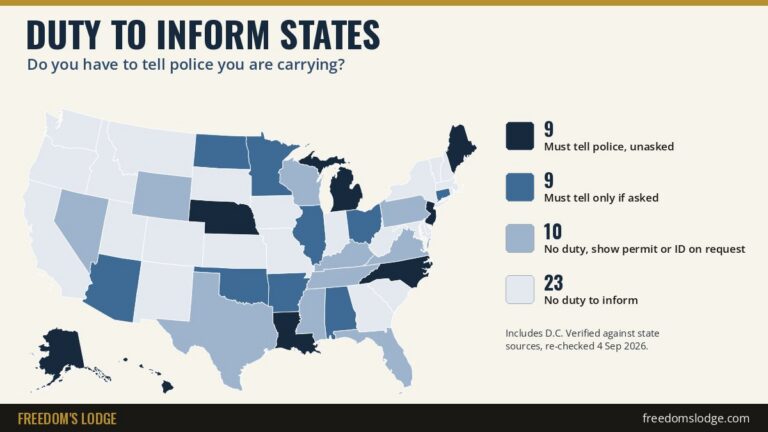
If you have searched “suppressor laws near me” or wondered whether a hearing-safe range day near you is one court ruling away from getting simpler, this is the case to watch. And if you carry, the same Bruen logic is reshaping where you can do it — see our running breakdown of where your carry permit is valid. The map of where your rights are protected is being redrawn one circuit at a time.
The bottom line
A criminal defendant lost his appeal, and gun owners won the war’s opening battle. The Fifth Circuit put suppressors inside the Second Amendment. The Ninth Circuit tried to keep them out. That contradiction now sits one petition away from the only court that can settle it. For 91 years the federal government treated the suppressor as something to be taxed, tracked, and feared. This week a federal court called it what it always was: an arm.
Frequently asked questions
Did the Fifth Circuit suppressor ruling make silencers legal everywhere?
No. The ruling holds that suppressors are “arms” protected by the Second Amendment, but it did not strike down the National Firearms Act. You still register a suppressor, pass a background check, and wait for ATF approval. The decision strengthens the legal foundation for future challenges; it does not erase the existing process.
Why was Comeaux’s conviction affirmed if suppressors are protected?
Comeaux made unregistered suppressors and never used the NFA’s “shall-issue” system. The court ruled that because he never alleged the registration process was abused against him, he failed to show it burdened his rights. The protected-arms holding stands as precedent even though his individual challenge lost.
What is the circuit split, and why does it matter?
The Fifth Circuit ruled June 18, 2026 that suppressors are protected arms; the Ninth Circuit ruled June 3, 2026 that they are not. When federal appeals courts disagree on the same constitutional question, the Supreme Court is far more likely to step in and resolve it. That split is the fastest route to a national answer.
Could the Supreme Court take the suppressor case?
It can, though it sets its own timeline. A direct circuit split is one of the strongest reasons the Court grants review. Either the Comeaux or DeBorba decision could be appealed, or a cleaner case such as Sanchez v. Bonta could carry the question up. There is no fixed deadline.
Does this ruling change the $200 tax stamp?
No. The $200 NFA transfer tax was eliminated on January 1, 2026, separate from this case. The Fifth Circuit ruling is about constitutional protection, not the cost of the stamp. Buying a suppressor today involves the registration process but no longer the $200 transfer tax.
What should suppressor owners do now?
Keep your paperwork current and keep buying through the legal process. The ruling does not authorize unregistered devices — Comeaux’s conviction proves that. The smart move is to stay compliant while the courts settle the broader question, because lawful owners with clean records make the strongest future plaintiffs.
Sourcing note
This article is based on the Fifth Circuit’s published opinion in United States v. Comeaux, No. 24-30307 (5th Cir. June 18, 2026), and the Ninth Circuit’s decision in United States v. DeBorba (June 3, 2026). Direct quotations are drawn from the Comeaux opinion authored by Judge Jerry E. Smith. Legal standards referenced are from New York State Rifle & Pistol Association v. Bruen (2022) and District of Columbia v. Heller (2008).
The same court, a year later: Chief Judge Reed O’Connor applied the same historical-tradition analysis to unfinished frames and receivers in August 2026, holding the ATF’s frame and receiver rule unconstitutional as applied.


Reader Favorites
- Hot Take: Viridian V-Series Long-Range Illuminators
- Officer Justifiably Shoots Good Guy: Lessons For Armed Citizens
- Be Your Own AR-15 Armorer With This Kit
- Mossberg Celebrates Century With New CCW Pistol
- CCW Central: Check Out Concealed Carry Expo this May in Pittsburgh
- Free Self-Defense Videos From Viridian Weapon Tech
Gun-owner reference desk
Plain-English references worth bookmarking — NFA rules, carry law, and the gear terms behind every review.
| 2026 at a glance | |
|---|---|
| NFA tax stamp | $0 |
| Permitless carry | 29 states |
| Suppressors legal | 42 states |
50+ NFA, carry and gun-law terms in plain English, updated for 2026.
Open the glossary → Network| Term | Category |
|---|---|
| Striker-fired | Action |
| MOA | Optics |
| Twist rate | Ballistics |
30 gun, ammo and optics terms, from Guns & Gadgets Daily.
View full chart →