Supreme Court Takes Up the “Assault Weapons” Ban — What It Means for Your AR-15 and Your Rights
Last updated: July 2, 2026 • Status: Certiorari granted June 30, 2026 — awaiting oral argument • Next milestone: Oral argument (expected fall 2026) • Bans right now: Still in effect nationwide during review.
Bookmark this page. We update it every time the docket moves — new briefs, the argument date, and the decision.
The bottom line: On June 30, 2026, the U.S. Supreme Court agreed to decide whether states and counties can ban AR-15s and similar semi-automatic rifles. This is not a ruling — the Court has not struck down or upheld anything yet. It has taken two cases, Viramontes v. Cook County and Grant v. Higgins, and will hear them in its next term. For the first time since 2008, the justices will answer the question at the heart of a decade of litigation: is the AR-15 a protected “arm” under the Second Amendment? Every “assault weapon” ban in the country now hangs on the answer.
What the Supreme Court actually did
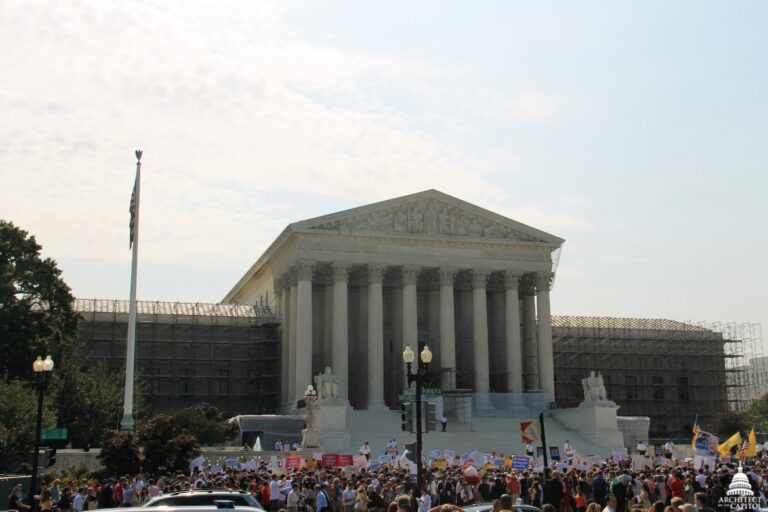
On Tuesday, June 30, 2026 — the final order day of its term — the Supreme Court granted certiorari in two Second Amendment cases and consolidated them for argument. “Granting cert” means the Court agreed to hear the cases. It did not decide them. No ban was struck down, and no ban was upheld.
The two cases, brought by the Second Amendment Foundation (SAF) and its partners, challenge bans on commonly owned semi-automatic rifles in Cook County, Illinois and Connecticut. The justices set aside one hour for argument across both cases and will hear them together in the term that begins in October 2026. As of late August 2026 no argument date had been set; with respondents’ briefs due October 21, the earliest realistic sitting is December. Lower courts had upheld both laws.
That timing is no accident. The Court added these cases at its end-of-term “clean-up conference” — the same conference where, one year earlier, it declined a nearly identical Maryland case while four justices signaled they were ready to take the issue on. This time, they did.


The two cases: Viramontes v. Cook County and Grant v. Higgins
The Court consolidated two challenges so it can resolve the rifle question once, with a national answer.
- Viramontes v. Cook County (No. 25-238) — Filed in 2021 by Illinois resident Cutberto Viramontes, joined by the Firearms Policy Coalition (FPC), the Second Amendment Foundation, and other private citizens. It challenges Cook County’s ordinance banning AR-15-pattern and similar rifles — the ordinance that served as the model for Illinois’s statewide ban. The Seventh Circuit upheld it.
- Grant v. Higgins (No. 25-566) — SAF’s challenge to Connecticut’s ban, joined by the Connecticut Citizens Defense League and three private citizens. Connecticut passed the law after the 2012 Sandy Hook shooting; it bans certain semi-automatic rifles by name and by feature. The Second Circuit left the ban in place.
A third petition, National Association for Gun Rights v. Lamont (No. 25-421), was held over rather than granted. The likely reason: unlike the two pure rifle cases, it also raises the large-capacity-magazine question, and the Court is holding the magazine cases separately for now. In plain terms — this case is about the rifles, not magazines.
The exact question the justices will answer
The Court limited its review to a single, sharply framed question:
Whether the Second and Fourteenth Amendments protect the right to possess AR-15-platform and similar semi-automatic rifles in common use.
That phrase — “in common use” — is the whole ballgame. Under the Court’s 2008 decision in District of Columbia v. Heller, the Second Amendment protects arms that are “in common use at the time” for lawful purposes. Gun-rights groups argue the AR-15 is the most obvious “common use” firearm in America. Ban defenders argue these rifles fall outside protection as “military-style” weapons. The justices now have to pick a side.
When will the Supreme Court decide?
Here’s the realistic road map. Dates marked “expected” are projections based on the Court’s normal calendar, not scheduled events.
| Stage | Timing |
|---|---|
| Cert granted & cases consolidated | June 30, 2026 ✓ |
| Merits briefs & amicus briefs filed | Summer–fall 2026 (expected) |
| Oral argument (1 hour, both cases) | Fall 2026 — date not yet set |
| Decision issued | By end of term — likely June 2027 (expected) |
Big Second Amendment decisions almost always land in the final weeks of the term. Barring an unusual early ruling, expect the outcome in late June 2027. We’ll update this table the moment an argument date is posted.
Does anything change for gun owners right now?
No. Nothing changes today. This is the single most important thing for readers to understand, because a headline that says “Supreme Court takes up AR-15 ban” gets misread in both directions.
- The bans are still fully in effect. Illinois’s Protect Illinois Communities Act (PICA), Cook County’s ordinance, Connecticut’s ban, and every other state “assault weapon” law remain enforceable while the case is pending.
- No rights have expanded. Taking a case is not winning a case. If you live in a ban state, the law that applied to you last week still applies to you today.
- Comply until a court says otherwise. A cert grant is a signal about the future, not a change in the present. Registration deadlines, feature rules, and possession restrictions still carry real penalties.
In Illinois specifically, a federal district judge ruled PICA unconstitutional in November 2024, but the Seventh Circuit stayed that ruling in December 2024, which keeps the law enforceable during appeal. That status has not changed.

Which states have “assault weapon” bans?
The two cases only name Cook County and Connecticut — but a decision striking down (or upholding) these bans would ripple across roughly a dozen states plus the District of Columbia that restrict semi-automatic rifles in some form:
- California
- Colorado
- Connecticut
- Delaware
- Hawaii (partial)
- Illinois
- Maryland
- Massachusetts
- New Jersey
- New York
- Rhode Island
- Washington
- Washington, D.C.
The details vary widely — some use a named-model list, some a feature test, some grandfather older firearms and some don’t. But every one of these laws rests on the same legal foundation the Supreme Court is about to examine. If the Court holds that AR-15s are protected “arms,” each of these bans becomes vulnerable to challenge on the same grounds.
How we got here: Heller, Bruen, and Snope
This case didn’t come out of nowhere. It’s the culmination of nearly two decades of Second Amendment law.
- Heller (2008): The Court recognized an individual right to keep and bear arms and said the Amendment protects weapons “in common use” for lawful purposes.
- Bruen (2022): The Court threw out “interest-balancing” tests and held that gun laws must be consistent with the nation’s historical tradition of firearm regulation. Lower courts have split badly over how to apply that standard to rifles.
- Snope v. Brown (2025): The Court declined to hear a challenge to Maryland’s ban. But Justices Thomas, Alito, and Gorsuch said they would have taken it, and Justice Kavanaugh called the ruling upholding the ban “questionable,” writing that the Court “should and presumably will address the AR-15 issue soon, in the next Term or two.” That prediction just came true.
The Court has also been broadly protective of gun rights this term — striking down a Hawaii carry restriction and a federal ban on gun ownership by marijuana users. Gun-rights advocates read the tea leaves accordingly.
What each side is arguing
A cornerstone piece owes readers the strongest version of both arguments. Here they are.
The challengers (SAF, FPC, and gun owners)
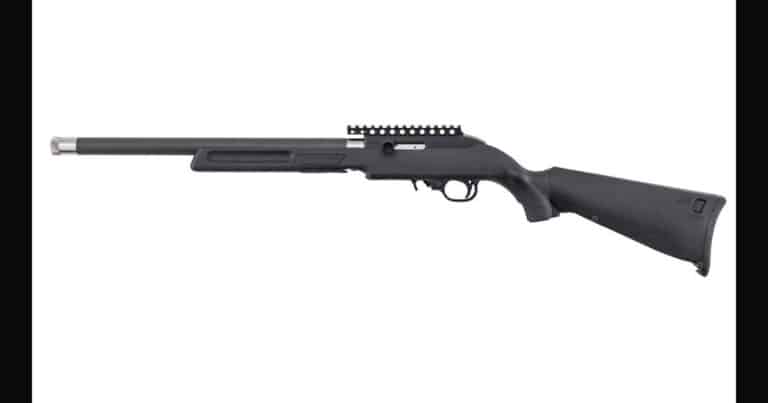
Their case is simple and rooted directly in Heller: the AR-15 is the most popular rifle in America — the industry counts more than 30 million “modern sporting rifles” in circulation — which puts it squarely inside “common use for lawful purposes.” Citing FBI data, the petition notes that rifles of any kind were used in an average of roughly 380 homicides per year from 2014–2023, compared with about 7,043 for handguns. A firearm owned by tens of millions of law-abiding citizens, they argue, cannot be treated as outside the Constitution because of how it looks.
The ban defenders (Cook County, Connecticut, gun-safety groups)
Cook County and Connecticut argue these are dangerous, military-style weapons designed for combat, not self-defense, and that their capacity for mass casualties — Highland Park, Sandy Hook — justifies regulation. Connecticut’s attorney general has vowed to defend the law “with everything we’ve got,” and county officials contend that challengers have not shown these rifles are actually chosen or used for lawful self-defense. Lower courts have repeatedly accepted a version of this argument, which is why every appeals court to rule on the question had, until now, upheld the bans.
Why this is the biggest 2A case since Bruen
Since Bruen, the fight over “assault weapon” bans has been a slow-motion standoff: gun owners winning arguments in some courtrooms, losing in others, with no national answer. This case ends the standoff. Whichever way it goes, the Court will finally tell the country whether the most common rifle in America is protected by the Second Amendment — a question left open since Heller.
For gun owners, this is the case a generation of Second Amendment litigation has been building toward. For ban states, it’s an existential test of laws they’ve defended for years. Either way, the ground under American gun policy is about to shift — and this page will track every step.
Frequently asked questions
Did the Supreme Court ban or overturn assault weapons bans?
No. On June 30, 2026, the Court agreed to hear two challenges to “assault weapon” bans — it did not rule on them. No ban has been struck down or upheld. A decision is not expected until the following term, likely around June 2027.
What is Viramontes v. Cook County?
It’s the lead Supreme Court case (No. 25-238) challenging Cook County, Illinois’s ban on AR-15-style rifles. Filed in 2021 by Cutberto Viramontes with the Firearms Policy Coalition and Second Amendment Foundation, it was consolidated with the Connecticut case Grant v. Higgins for argument in the Court’s October 2026 term.
When will the Supreme Court rule on the assault weapons ban?
Oral argument is expected in fall 2026, with a decision most likely by the end of the term in late June 2027. The Court has not yet set an argument date.
Is the Illinois assault weapons ban still in effect in 2026?
Yes. The Protect Illinois Communities Act (PICA) and Cook County’s ordinance remain fully enforceable. A district court ruled PICA unconstitutional in November 2024, but the Seventh Circuit stayed that ruling, so the ban stays in effect while the litigation continues.
Which states have assault weapons bans?
Roughly a dozen states plus Washington, D.C.: California, Colorado, Connecticut, Delaware, Hawaii (partial), Illinois, Maryland, Massachusetts, New Jersey, New York, Rhode Island, and Washington. The Supreme Court’s decision could affect the enforceability of all of them.
What is the “common use” test?
It comes from the 2008 Heller decision, which held that the Second Amendment protects arms “in common use at the time” for lawful purposes. The central question in this case is whether AR-15-platform rifles — owned by tens of millions of Americans — meet that standard and are therefore constitutionally protected.
Does this case affect suppressors or magazines?
Not directly. The Court limited review to semi-automatic rifles. The large-capacity-magazine cases were held over separately, and suppressors are governed by a different legal framework under the National Firearms Act. This decision is specifically about whether the rifles themselves are protected.
Freedom’s Lodge is tracking Viramontes v. Cook County and Grant v. Higgins from cert to decision. This article is updated as the docket moves. It is provided for news and educational purposes and is not legal advice; consult a qualified attorney about your specific situation and always verify current firearm law with official state sources before acting.


Reader Favorites
- What To Do With Inherited Guns: A Calm, Legal 2026 Guide
- Second Amendment News This Week: 5 Stories That Matter
- New Jersey’s Assault Weapons Ban Struck Down: What the Third Circuit Ruling Means (2026)
- Second Amendment News: New Jersey’s AR-15 Ban Struck Down (July 2026)
- Virginia Assault Weapons Ban Blocked Statewide: What the Injunction Means
- Maryland Glock Ban: Gun Groups Ask a Court to Freeze SB 334 (2026)
Gun-owner reference desk
Plain-English references worth bookmarking — NFA rules, carry law, and the gear terms behind every review.
| 2026 at a glance | |
|---|---|
| NFA tax stamp | $0 |
| Permitless carry | 29 states |
| Suppressors legal | 42 states |
50+ NFA, carry and gun-law terms in plain English, updated for 2026.
Open the glossary → Network| Term | Category |
|---|---|
| Striker-fired | Action |
| MOA | Optics |
| Twist rate | Ballistics |
30 gun, ammo and optics terms, from Guns & Gadgets Daily.
View full chart →