Second Amendment News This Week: 5 Stories That Matter
The Second Amendment news this week ran the table: the Supreme Court locked in a landmark AR-15 case, three federal lawsuits took aim at the NFA registry, the Seventh Circuit upheld Illinois’ hardware ban, the Justice Department sued two states, and the House voted to keep gun purchases out of the payment networks’ filing cabinets. Any one of these would headline a normal week. Here are the five stories every gun owner should understand, what each one actually decided, and what happens next.
Last updated: August 5, 2026 · Originally published July 16, 2026
The week at a glance
| Date | What happened | Why it matters |
|---|---|---|
| July 1 | SCOTUS grants cert in Viramontes and Grant | First direct Supreme Court test of “assault weapon” bans |
| July 9 | Seventh Circuit upholds Illinois’ PICA ban, 2–1 | Sharpens the conflict SCOTUS is about to resolve |
| July 14 | House passes H.R. 1181, 221–201 | Blocks firearm-specific merchant category codes |
| July 15 | SAF files supplemental briefs in three NFA cases | Argues a $0 tax removes the registry’s legal foundation |
| This week | DOJ sues Virginia and California | The federal government is now litigating against state gun bans |
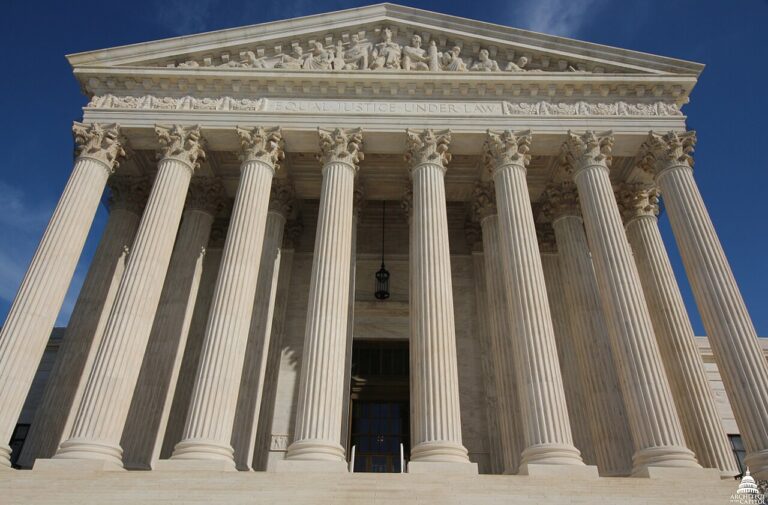
The Supreme Court will decide whether states can ban AR-15s
The Court granted certiorari in Viramontes v. Cook County, out of the Seventh Circuit, and Grant v. Higgins, out of the Second Circuit, consolidating the two cases for a single argument in the term that begins this October. A decision is expected by summer 2027.
The grant is the payoff gun owners were promised. When the Court denied cert in Snope v. Brown and Ocean State Tactical v. Rhode Island last year, Justice Kavanaugh wrote that the Court “should and presumably will address the AR-15 issue soon, in the next Term or two.” That prediction is now on the docket, and the consolidated question is the one lower courts have split on since Bruen: is the best-selling rifle in America, owned by millions, a protected arm — or can legislatures classify it out of the Second Amendment entirely? Roughly ten states plus numerous localities enforce bans that hinge on the answer. We covered the cert grant in depth in our full breakdown of the assault weapons ban cases.
No tax, no registry? SAF opens a three-front attack on the NFA
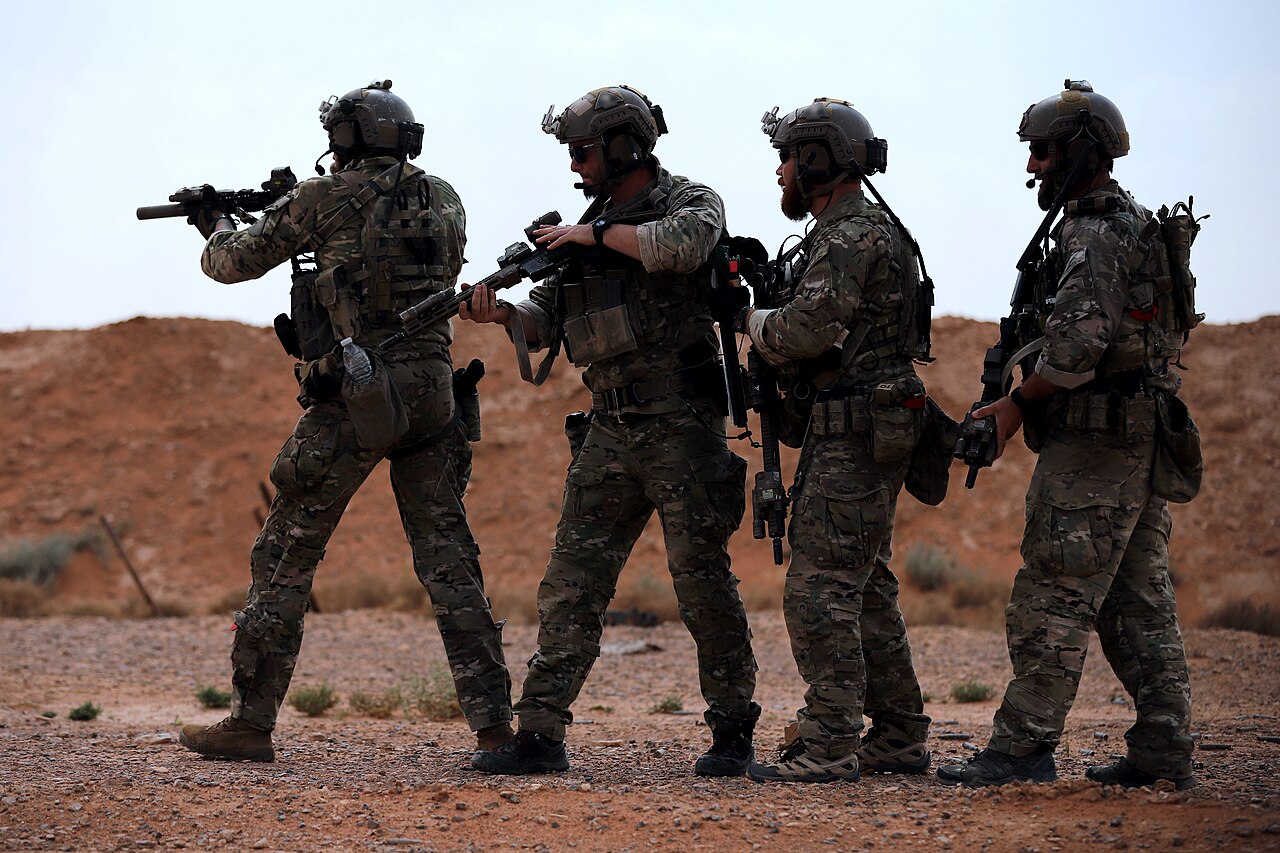
On July 15, the Second Amendment Foundation and its partners filed supplemental briefs in Brown v. ATF, Jensen v. ATF, and Roberts v. ATF, arguing that the National Firearms Act’s registration scheme for suppressors and short-barreled firearms lost its constitutional foundation the day Congress zeroed the tax.
The logic is simple. The NFA survived for 90 years as an exercise of Congress’s taxing power — the $200 making and transfer tax was the legal hook, and registration was merely the mechanism for collecting it. The One Big Beautiful Bill Act eliminated that tax on suppressors, short-barreled rifles, short-barreled shotguns, and “any other weapons” effective January 1, 2026. The tax is gone; the fingerprints, photographs, registration, prior-approval wait, and felony penalties all remain. SAF’s argument, echoed in a growing chorus of challenges: a tax scheme with no tax is just a registry, and a standalone federal firearms registry has to survive Second Amendment scrutiny on its own. The briefs contend three Supreme Court rulings handed down this summer leave the government with neither a valid taxing-power excuse nor an easy escape from the Second Amendment.
For suppressor owners the stakes are practical, not academic: if any of the three courts agrees, the Form 4 registration process itself — not just the tax — is on the chopping block.
The Seventh Circuit upholds Illinois’ ban in Barnett v. Raoul
On July 9, a three-judge panel upheld the Protect Illinois Communities Act, ruling 2–1 that Illinois’ ban on AR-15-style rifles and magazines over 10 rounds (15 for handguns) fits within the nation’s tradition of firearm regulation — leaning on historical analogues that included 19th-century Bowie knife laws.
Chief Judge Michael Brennan’s dissent made the counterpoint plainly: the AR-15 is the best-selling rifle in America, and the banned magazines are standard capacity, not “large.” The firearm industry’s trade association called the ruling out within hours. The timing is the real story: with Viramontes and Grant already granted, Barnett won’t be the vehicle — but it deepens the split the Supreme Court is about to resolve, and if the Court holds that AR-15s are protected arms, PICA falls with it.
The DOJ is suing Virginia and California over their gun laws
The Justice Department filed suit against two states this week, arguing their new restrictions violate the Second Amendment. In Virginia, DOJ is targeting the commonwealth’s ban on the sale of semiautomatic firearms. In California, it is challenging a newly enacted law restricting the sale of pistols with triggers that could theoretically be modified into “machinegun-convertible” configurations — a definition that sweeps in ordinary Glock-pattern handguns, among the most common defensive pistols in America. The litigation docket keeps growing.
The significance is the posture. The federal government litigating against state gun-control laws inverts the pattern gun owners watched for decades — challenges to state bans no longer ride solely on the resources of SAF, FPC, NRA, and private plaintiffs. And both suits feed the Supreme Court term ahead: the states defending hardware bans may find themselves arguing against both the gun-rights bar and the United States.
The House votes to block credit-card tracking of gun purchases

On July 14, the House passed H.R. 1181, the Protecting Privacy in Purchases Act, by a vote of 221–201. Sponsored by Rep. Riley Moore, the bill prohibits payment card networks from requiring firearm retailers to use a distinct merchant category code — the mechanism created in 2022 that privacy advocates warned would function as a de facto credit-card gun registry. It also gives the Attorney General authority to investigate violations, issue compliance orders, and seek injunctions.
What it means for you: if H.R. 1181 becomes law, your bank cannot flag, categorize, or report your purchases at a gun store any differently than purchases at a hardware store. The bill now moves to the Senate, where the math is tighter — but more than a dozen states have already banned firearm-specific merchant codes on their own, and the House vote puts national pressure on the networks either way.
Also this week: courts split on under-21 gun bans
Two rulings deepened the divide on age-based restrictions. A federal judge in the Western District of Missouri struck down Jackson County’s ban on handgun purchases by adults under 21, while the Appellate Court of Maryland upheld that state’s ban on firearm possession by under-21s. Whether 18-to-20-year-old adults hold full Second Amendment rights is shaping up as the next major split — likely a future Supreme Court case in its own right. For where carry rights already stand, see our state-by-state constitutional carry guide.
Frequently asked questions
What cases did the Supreme Court agree to hear on assault weapon bans?
The Court granted certiorari in Viramontes v. Cook County (Seventh Circuit) and Grant v. Higgins (Second Circuit), consolidating them for a single argument in the term beginning October 2026. The cases ask whether AR-15-style semiautomatic rifles are arms protected by the Second and Fourteenth Amendments.
When will the Supreme Court rule on the AR-15 ban cases?
Argument is expected in the fall of 2026, with a decision likely by the end of the term in June or July 2027. The ruling will determine whether roughly ten state bans and numerous local bans on AR-15-style rifles can stand.
Is the NFA tax stamp still required for suppressors in 2026?
The $200 NFA tax was eliminated effective January 1, 2026, so suppressor transfers are now tax-free. However, NFA registration — Form 4 paperwork, fingerprints, photographs, and ATF approval — is still required. The SAF lawsuits in Brown, Jensen, and Roberts v. ATF challenge whether that registration requirement can survive without the tax.
What does the Protecting Privacy in Purchases Act do?
H.R. 1181 prohibits payment card networks from using a firearms-specific merchant category code to distinguish gun retailers from general-merchandise or sporting-goods stores, and authorizes the Attorney General to investigate and enjoin violations. It passed the House 221–201 on July 14, 2026, and now goes to the Senate.
Did the Seventh Circuit uphold the Illinois assault weapons ban?
Yes. On July 9, 2026, a Seventh Circuit panel ruled 2–1 in Barnett v. Raoul that the Protect Illinois Communities Act’s ban on AR-15-style rifles and standard-capacity magazines is constitutional. Chief Judge Brennan dissented. The Supreme Court’s upcoming ruling in the consolidated AR-15 cases will likely decide PICA’s ultimate fate.
One week, five fronts — the Supreme Court, three district courts, a federal appeals court, the Justice Department, and the House. The common thread is that the biggest questions in gun rights are finally getting answered on the merits. We will cover each one as it moves.
By James Nicholas · July 16, 2026
Related: Read our full report on the In-N-Out shooting in Twin Falls, Idaho.
Reader Favorites
- Supreme Court Takes Up the “Assault Weapons” Ban — What It Means for Your AR-15 and Your Rights
- What To Do With Inherited Guns: A Calm, Legal 2026 Guide
- New Jersey’s Assault Weapons Ban Struck Down: What the Third Circuit Ruling Means (2026)
- Second Amendment News: New Jersey’s AR-15 Ban Struck Down (July 2026)
- Virginia Assault Weapons Ban Blocked Statewide: What the Injunction Means
- Maryland Glock Ban: Gun Groups Ask a Court to Freeze SB 334 (2026)
Gun-owner reference desk
Plain-English references worth bookmarking — NFA rules, carry law, and the gear terms behind every review.
| 2026 at a glance | |
|---|---|
| NFA tax stamp | $0 |
| Permitless carry | 29 states |
| Suppressors legal | 42 states |
50+ NFA, carry and gun-law terms in plain English, updated for 2026.
Open the glossary → Network| Term | Category |
|---|---|
| Striker-fired | Action |
| MOA | Optics |
| Twist rate | Ballistics |
30 gun, ammo and optics terms, from Guns & Gadgets Daily.
View full chart →