DOJ Gun Lawsuits: Why the Feds Just Took Denver and Colorado to Court
The DOJ gun lawsuits against Denver and Colorado landed back-to-back in early May 2026, and they mark a turning point most gun owners never expected to see: the federal government suing a city and a state to strike down gun control. For decades, the legal burden fell on individual gun owners and 2A organizations scraping together donations to fight billion-dollar state legal departments. Now the Department of Justice has entered the arena — and it picked two of the biggest targets in the country.
Last updated: September 30, 2026 · Originally published June 4, 2026
Two DOJ Gun Lawsuits in Two Days
On May 5, the Justice Department sued the City of Denver over its 1989 ordinance criminalizing so-called “assault weapons” — a ban that sweeps in AR-15-style rifles, the most popular rifles in America. One day later, the DOJ filed a second suit against the State of Colorado over its ban on standard-capacity magazines.
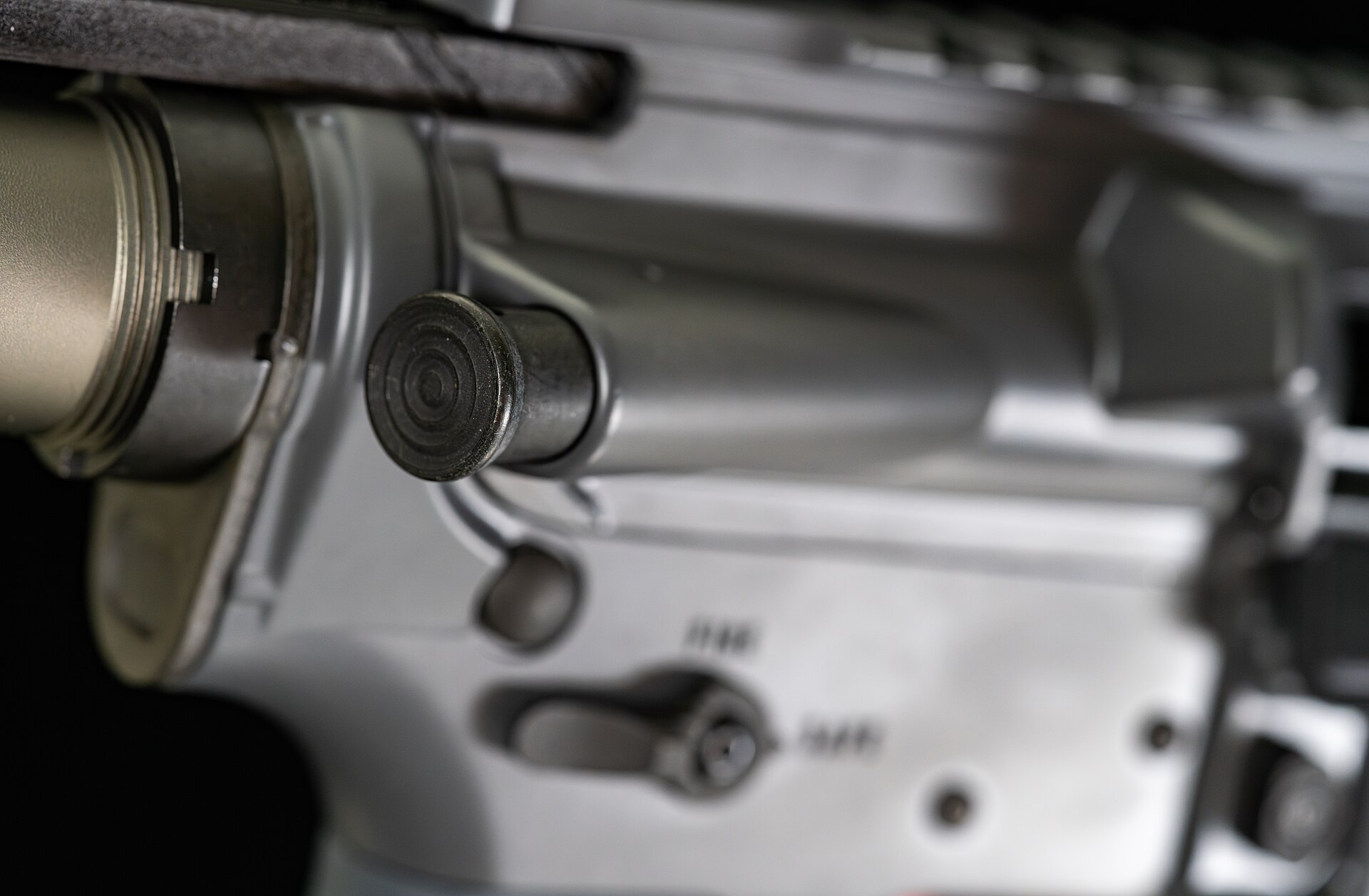
Both complaints rest on the same foundation: District of Columbia v. Heller, the 2008 Supreme Court decision holding that the Second Amendment protects arms in common use for lawful purposes. Tens of millions of Americans own the rifles Denver bans. Hundreds of millions of the magazines Colorado prohibits sit in range bags and nightstands across the country. Under Heller, that is the ballgame — common use means protected.
Acting Attorney General Todd Blanche put it bluntly in the DOJ announcement: “The Constitution is not a suggestion and the Second Amendment is not a second-class right.”


“Hell, No!” — How Denver Picked This Fight
The Denver suit has a backstory. In late April, Assistant Attorney General Harmeet Dhillon sent Mayor Mike Johnston a letter demanding the city repeal its semi-auto ban. The letter doubled as a document-retention notice — the legal equivalent of telling someone to lawyer up. Johnston answered at a press conference with two words: “Hell, no.”
The DOJ filed suit in the U.S. District Court for the District of Colorado less than 24 hours later. The 12-page complaint names the city and county of Denver and the Denver Police Department as defendants, and it pulls no punches on terminology, quoting Justice Thomas’s observation that “assault weapon” is a political term invented by anti-gun publicists, not a technical firearms classification.
Here’s the number that should embarrass Denver’s leadership: according to the city’s own police chief, of roughly 2,100 guns Denver officers recovered last year, fewer than 40 — about 2% — were “assault-style” weapons. The city has enforced a criminal ban on the most popular rifle in America for 37 years over a rounding error in its own crime data.
The Colorado Magazine Ban Suit
The companion case against Colorado targets the state’s “large-capacity magazine” ban, which criminalizes magazines over 15 rounds — including the factory-standard magazines that ship with most modern handguns and rifles. The complaint highlights an awkward fact: Colorado has previously admitted in court that its law bans magazines that come standard with many of the most popular firearms in the nation.
Dhillon called the ban “political virtue signaling at the expense of Americans’ constitutional right to keep and bear arms.” That language matters. The DOJ isn’t treating magazine limits as a reasonable regulation with constitutional rough edges — it’s treating them as theater performed on the backs of law-abiding citizens.
The Second Amendment Section Is Done Playing Defense

Both DOJ gun lawsuits came out of the Civil Rights Division’s Second Amendment Section, the unit created in late 2025 to treat gun rights like every other civil right the division enforces. We covered the section’s launch and what it means for gun owners when it opened its doors — and these filings answer the question skeptics kept asking: would it actually do anything?
It is doing something. The section maintains a public complaint portal where any American can report a Second Amendment violation directly to the DOJ. A city ordinance, a sheriff slow-walking permits, a state agency inventing requirements that don’t exist in statute — all of it can now land on a federal litigator’s desk. That is a structural change in who bears the cost of fighting infringement, and it pairs with the ATF’s “New Era of Reform” rulemaking push that opened for public comment this spring.
Why These DOJ Gun Lawsuits Matter Beyond Colorado
Denver and Colorado are test cases, not endpoints. California, New York, Illinois, Maryland, Massachusetts, and Connecticut all enforce semi-auto or magazine bans built on the same legal theory Denver is now defending. If the DOJ gun lawsuits produce a ruling that AR-15-style rifles and standard magazines are protected arms in common use, every one of those bans inherits the same constitutional defect — with a federal precedent attached.
The timing compounds the pressure. The Supreme Court is expected to decide Wolford v. Lopez, the carry-on-private-property case, by the end of June, and semi-auto ban challenges are stacked up behind it waiting for certiorari. Meanwhile, states are running the anti-PLCAA playbook to attack the industry from the civil-liability side. The legal map for the next decade of gun rights is being drawn right now, and for the first time the federal government is drawing on our side of it.
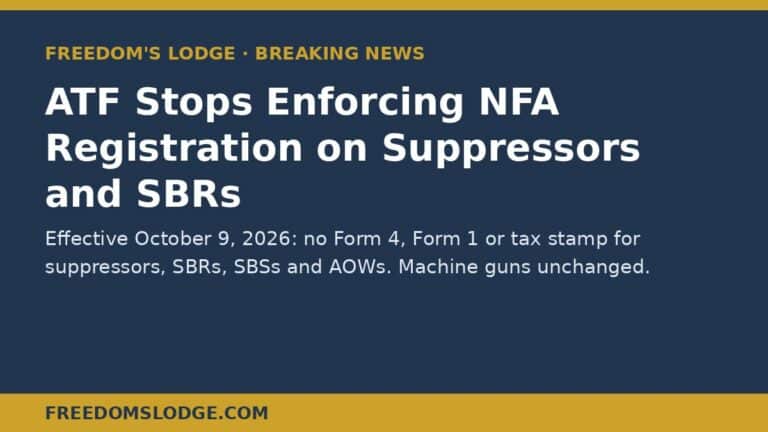
Gun owners have already seen what this alignment produces. The NFA tax stamp dropped to $0 in January, suppressor ownership got dramatically easier, and gun-rights groups are pressing Brown v. ATF to finish the job on NFA registration. Our friends at PopularSuppressors are marking that shift with the 100 Days of Silence giveaway campaign — one more sign of how fast the ground is moving.
What Happens Next
Denver and Colorado will fight the DOJ gun lawsuits rather than fold. Everytown Law is already backing Denver’s defense, and expect both cases to run through the Tenth Circuit no matter who wins at the district court. That is likely years of litigation — but litigation with the resources of the Justice Department behind it instead of a donation-funded legal team.
Watch three things. First, whether other banned-feature jurisdictions quietly amend their ordinances rather than invite the next DOJ gun lawsuits. Second, whether the Supreme Court takes a semi-auto ban case next term, which could leapfrog this litigation entirely. Third, whether the complaint portal generates new federal cases — because the DOJ has invited every gun owner in America to hand it targets.
Frequently Asked Questions
What are the DOJ gun lawsuits against Denver and Colorado about?
The DOJ sued Denver on May 5, 2026 over its ban on semi-automatic rifles, and sued Colorado on May 6 over its standard-capacity magazine ban. Both DOJ gun lawsuits argue the bans violate the Second Amendment because they prohibit arms in common use for lawful purposes, the standard set by D.C. v. Heller.
Who filed the DOJ gun lawsuits?
The Civil Rights Division’s Second Amendment Section, under Assistant Attorney General Harmeet Dhillon, filed both cases in the U.S. District Court for the District of Colorado. It is the first DOJ unit dedicated to enforcing the Second Amendment as a civil right.
Does this affect gun owners outside Colorado?
Potentially, yes. If the DOJ gun lawsuits produce a federal ruling that AR-15-style rifles and standard magazines are constitutionally protected, similar bans in California, New York, Illinois, Maryland, Massachusetts, and Connecticut inherit the same defect.
How do I report a Second Amendment violation to the DOJ?
The Second Amendment Section accepts complaints from the public at justice.gov/crt/second-amendment-section. If a government agency is infringing your right to keep and bear arms, you can file directly.
More Gun Rights Coverage from Freedom’s Lodge
- DOJ Second Amendment Rights Section: What It Means
- Wolford v. Lopez: How the Case Reshapes Concealed Carry Laws
- The Anti-PLCAA Playbook: How 11 States Are Routing Around Federal Law
- Brown v. ATF: Why Suppressor Registration Is Under Fire
- Second Amendment Controversies in 2026: The 3 Biggest Fights
Related: See how Idaho’s constitutional carry law let a good guy with a gun respond in Twin Falls.

Reader Favorites
- Smells Like Infringement: Gun Banners in the News
- Smells Like Infringement: Gun Banners in the News (As Usual)
- Smells Like Infringement: 5 Ways H.R. 8 Could Make You a Felon
- Hawaii Lame-O: State Wants to Repeal Second Amendment
- Smells Like Infringement: Gun Banners Stinking Up the Joint Again
- Connecticut Judge: Yes You Can (Break Federal Law if it’s to Sue Lawful Arms Manufacturer)
Gun-owner reference desk
Plain-English references worth bookmarking — NFA rules, carry law, and the gear terms behind every review.
| 2026 at a glance | |
|---|---|
| NFA tax stamp | $0 |
| Permitless carry | 29 states |
| Suppressors legal | 42 states |
50+ NFA, carry and gun-law terms in plain English, updated for 2026.
Open the glossary → Network| Term | Category |
|---|---|
| Striker-fired | Action |
| MOA | Optics |
| Twist rate | Ballistics |
30 gun, ammo and optics terms, from Guns & Gadgets Daily.
View full chart →