Flying With Firearms: The TSA Rules, Explained
Flying with firearms is completely legal in the United States — but only if you follow the TSA and airline rules exactly. Firearms travel in checked baggage, unloaded, in a locked hard case, and declared at the airline counter. Get any step wrong and a lawful trip can turn into a missed flight or worse. Here is how flying with firearms works, and where careful travelers get tripped up.
Last updated: October 9, 2026 · Originally published July 10, 2026
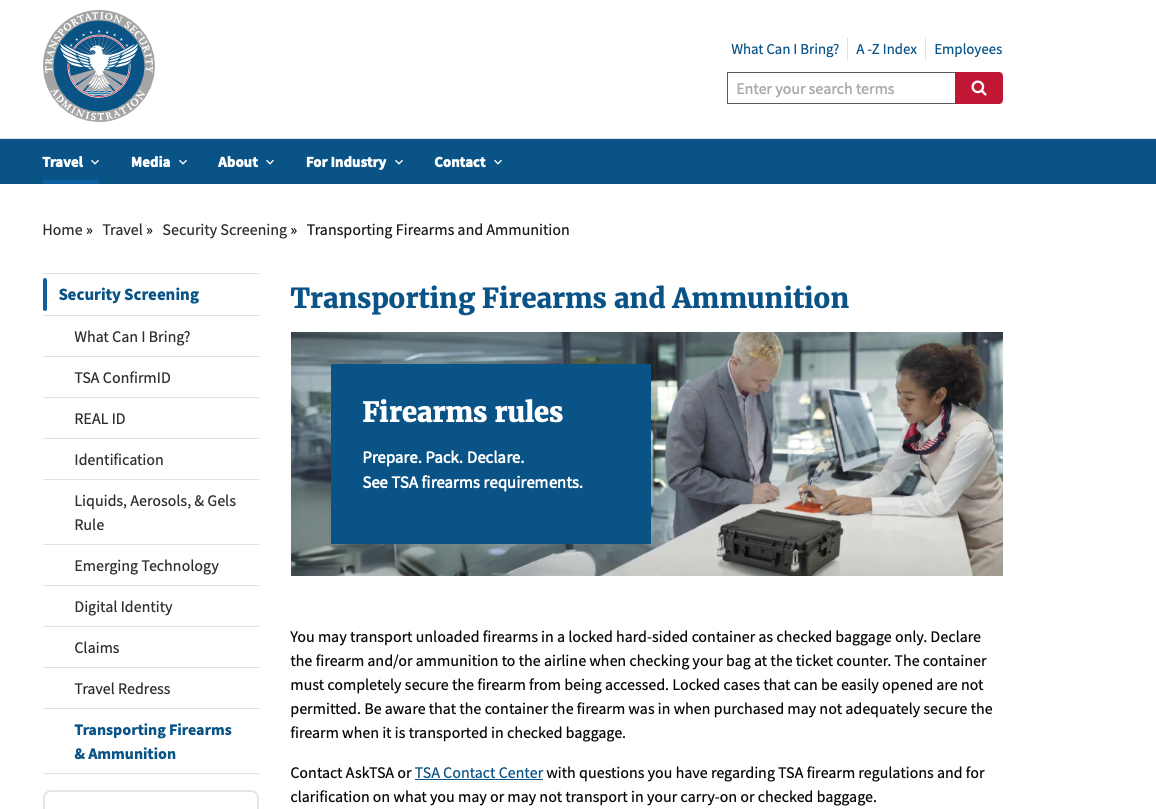
Can you fly with a firearm?
Yes. Federal law and TSA policy both allow you to fly with a firearm, provided it travels in checked baggage — never in a carry-on. You declare it at check-in, the airline tags the bag, and it flies in the cargo hold. Trying to bring a firearm through a TSA checkpoint or into the cabin is where travelers get arrested, even honest ones who simply forgot a pistol was in their bag.


The TSA rules for flying with firearms
The core requirements are consistent across airlines — TSA publishes the baseline:
- Unloaded. The firearm must be completely unloaded.
- Locked hard case. It must be in a locked, hard-sided container that no one but you can open. Soft cases do not qualify.
- Declared. You must declare the firearm verbally at the airline check-in counter and complete the airline’s declaration form.
- Checked only. The case goes in checked baggage. You keep the keys or set the combination yourself.
Individual airlines add their own wrinkles — case specifications, where the declaration tag goes, whether the firearm and ammo may share a case — so confirming your specific airline’s policy before you pack is part of doing it right.
USA Carry’s Flying with Guns series
The written rules are the floor. What happens at the counter varies by airline, airport, and agent — and that is where USA Carry’s Flying with Guns series earns its bookmark. Luke McCoy, who founded USA Carry in 2007, has documented 63 consecutive flights with declared firearms, covering each one from check-in through baggage claim: the declaration form, the case and locks, the ammunition, and the TSA interaction at every airport.
USA Carry is one of the largest concealed-carry communities in the country and a partner in Silencer Central’s 100 Days of Silence. The series spans Southwest, Delta, and Frontier across airports from Las Vegas to New Orleans to Cleveland, and its value is the repetition — after a few episodes, the process stops feeling like a gamble. Start with these:
- Episode 63 — Southwest, Las Vegas to Cleveland (GunCon 2026): a first pass through Cleveland’s airport, and the routine held.
- Episode 58 — Frontier, New Orleans to Las Vegas: recognized from TikTok mid-trip.
- Episode 55 — Delta, New Orleans to Salt Lake City: how a legacy carrier handles the declaration.
- Episode 53 — Southwest, New Orleans to Houston (NRA Annual Meeting): check-in at MSY with a Vaultek LifePod 2.0.
Every installment lives in the Flying with Guns archive. Pick the airline you fly most and watch how the process runs before your own trip.
The TSA firearm declaration, step by step
Declaring is simple once you have done it. Go to the airline’s ticket counter — not a kiosk, and never a security checkpoint. Tell the agent you have a firearm to declare. They hand you a small declaration card, which you sign and place inside the locked case with the firearm. The agent inspects that the gun is unloaded and the case is locked, then it goes into your checked bag. Keep the only keys or set the combination yourself. Arrive early; the process adds a few minutes.
Ammunition rules
Ammunition also flies checked, never in the cabin. Pack it securely in the original box, a plastic ammo case, or loaded magazines with the rounds fully enclosed. Airlines set a weight limit, often around 11 pounds. Many airlines allow ammunition in the same locked case as the firearm; some require it separate, so confirm your carrier’s policy. Loose rounds rolling in a bag are a common reason a checked bag gets flagged.
Connecting flights and layovers
A direct flight is simplest. Connecting flights add a wrinkle: your checked bag usually stays checked through to the destination, but if you have to claim and recheck, you declare again. The bigger issue is the law on the ground. You must be legal at your destination, and a lengthy layover where you leave the secure area can raise questions in a restrictive state. Plan routes with that in mind.
Destination laws and the federal transport rule
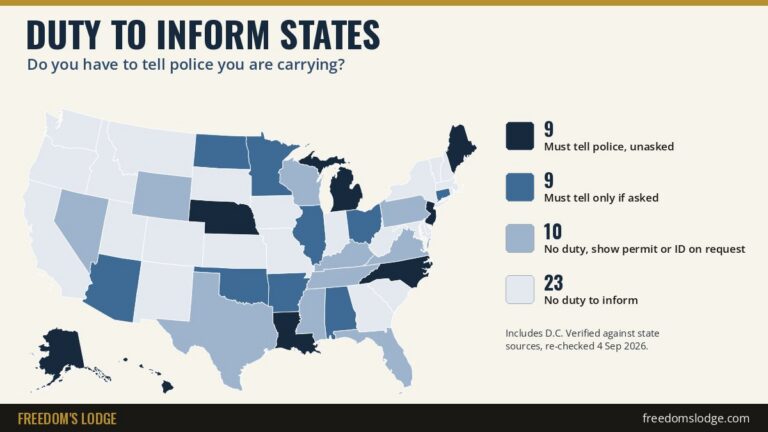
The federal transport protection that covers a lawful traveler assumes you are legal at both your departure and your destination. That makes your destination’s firearm laws — and sometimes a connecting airport’s — something to check before you fly. A magazine, a firearm, or a round count that is perfectly lawful at home can be restricted where you land. Flying with firearms is less about the flight than about knowing the law on both ends of it.
Flying with a suppressor or other NFA item
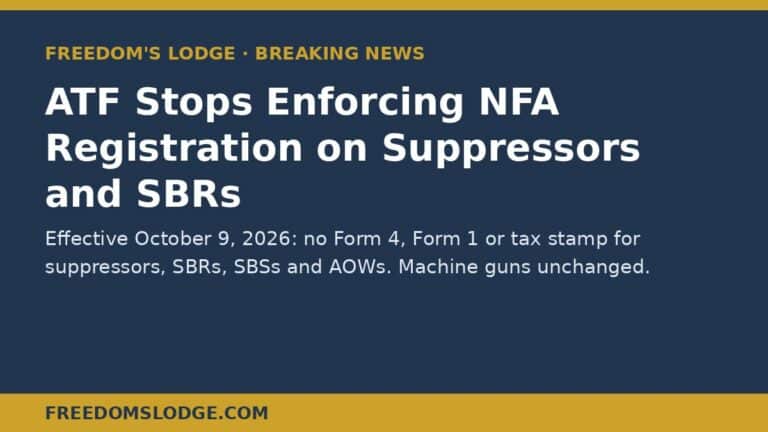
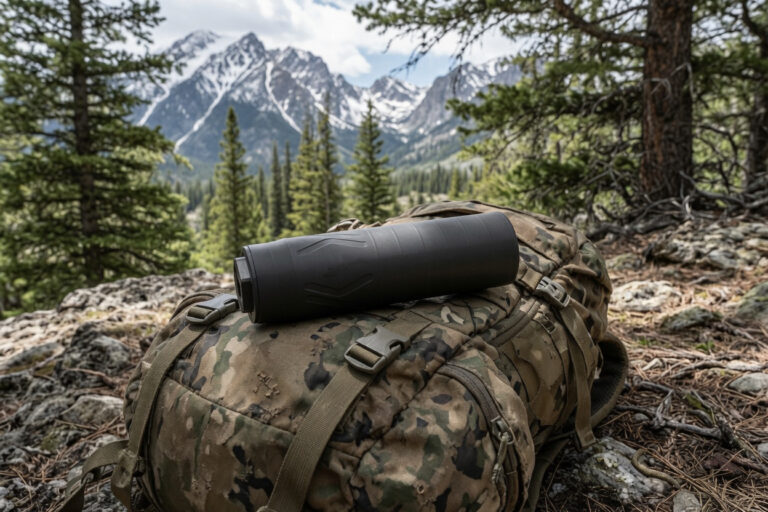
Suppressors are legal to fly with, and they travel like any other firearm accessory — checked, secured, and subject to your destination’s law. You are not required to carry the ATF approval to fly, but many owners bring a copy of the Form 4 or tax stamp for peace of mind. As always, confirm the item is legal where you land. For the concealed-carry side of the same trip, PopularSuppressors.com’s profile of USA Carry maps the 50-state CCW landscape.
Flying with firearms and the 100 Days of Silence
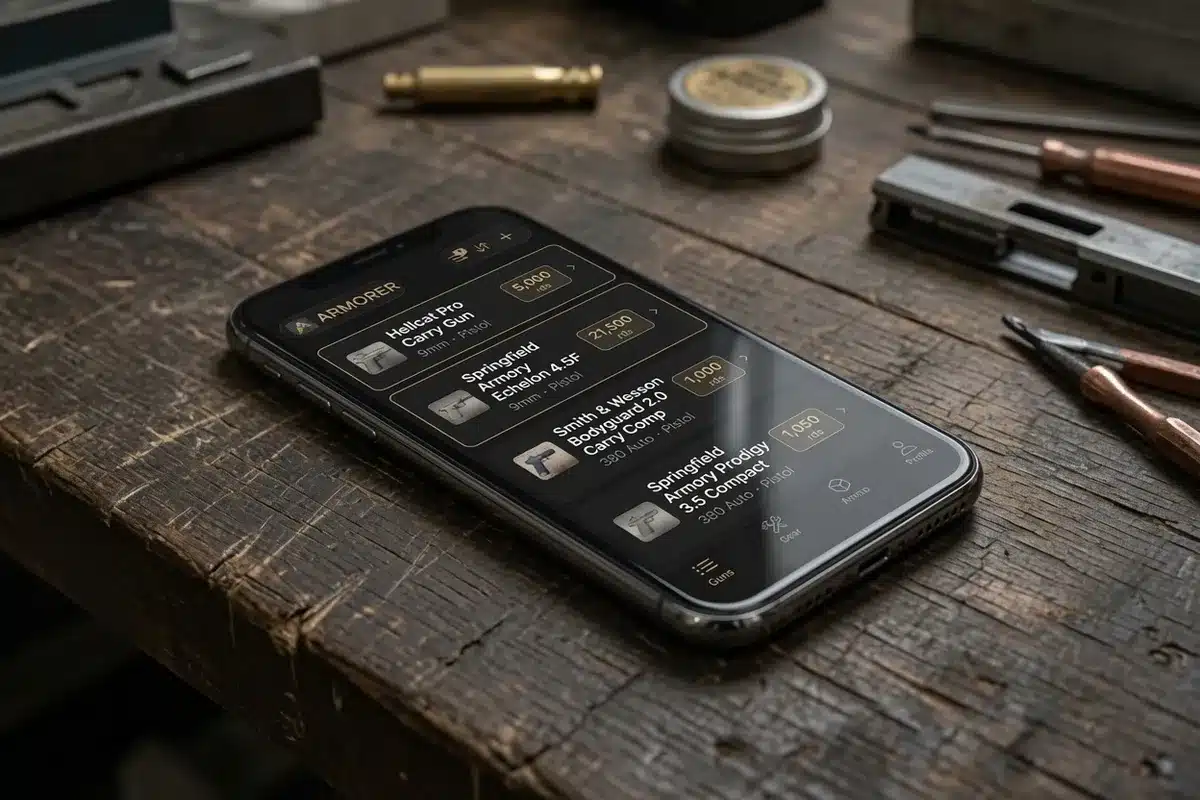
USA Carry’s Armorer Pro app is part of the Day 85 build in Silencer Central’s 100 Days of Silence — a complete suppressed 9mm given away Friday, July 10, 2026, entry free from 6:00 a.m.–10:00 p.m. CT, U.S. residents 21+. Traveling with a suppressor adds its own layer of rules, which is exactly why lawful gun owners lean on communities like USA Carry to get the details right.

Frequently asked questions
Can you fly with a firearm in the United States?
Yes, in checked baggage only. The firearm must be unloaded, in a locked hard-sided case, and declared at the airline counter. Firearms are never allowed in carry-on bags or the cabin.
How do you declare a firearm when flying?
Tell the agent at the airline check-in counter that you have a firearm to declare, then complete the airline’s declaration form, which goes inside or on the locked case per the airline’s policy.
Can you bring ammunition on a plane?
Only in checked baggage, packed securely in a box, ammo case, or enclosed magazines, within the airline’s weight limit. Ammunition is never allowed in carry-on bags.
Do you have to declare a firearm on connecting flights?
If your bag stays checked through, you declare once at origin. If you must claim and recheck the bag, you declare again at the next check-in.
Can you fly with a suppressor?
Yes. A suppressor flies checked like any firearm accessory, secured and subject to your destination’s law. Many owners carry a copy of the Form 4 for peace of mind.
Do destination laws matter when flying with firearms?
Yes. You must be legal at your destination — and awareness of a connecting state’s laws helps too. Magazine limits and other restrictions vary by state.
Flying with firearms is legal, routine, and unforgiving of shortcuts. Do it by the book — unloaded, locked, declared — and check the law where you land before you leave.
By James Nicholas · Updated July 7, 2026 · For airline- and state-specific detail, see USA Carry’s Flying with Guns series.
Related: New to carrying? Start with our everyday concealed carry tips.

Reader Favorites
- Virginia’s Gun-Hating Governor vs. Virginia
- Los Angeles Gun-Grabbers Confused, Terrified by Bill of Rights
- Guns at Coronavirus Quarantine Protests: Listen For the Loudest Scream
- Supreme Court Second Amendment Cases: Careful What You Wish For
- Has COVID-19 Secured the Second Amendment’s Future?
- Defending the Defensive Blade: New Knife Rights App
Gun-owner reference desk
Plain-English references worth bookmarking — NFA rules, carry law, and the gear terms behind every review.
| 2026 at a glance | |
|---|---|
| NFA tax stamp | $0 |
| Permitless carry | 29 states |
| Suppressors legal | 42 states |
50+ NFA, carry and gun-law terms in plain English, updated for 2026.
Open the glossary → Network| Term | Category |
|---|---|
| Striker-fired | Action |
| MOA | Optics |
| Twist rate | Ballistics |
30 gun, ammo and optics terms, from Guns & Gadgets Daily.
View full chart →