Cost of Silence: How a Survivor-Led Short Film Is Changing the Way Law Enforcement Trains on Human Trafficking
Last updated: May 30, 2026 · Originally published: May 28, 2026
A four-minute short film raises the bar for human trafficking awareness. It dropped on April 27, 2026. The audience splits in two: people who work near the problem, and people who don’t yet realize how close they live to it.
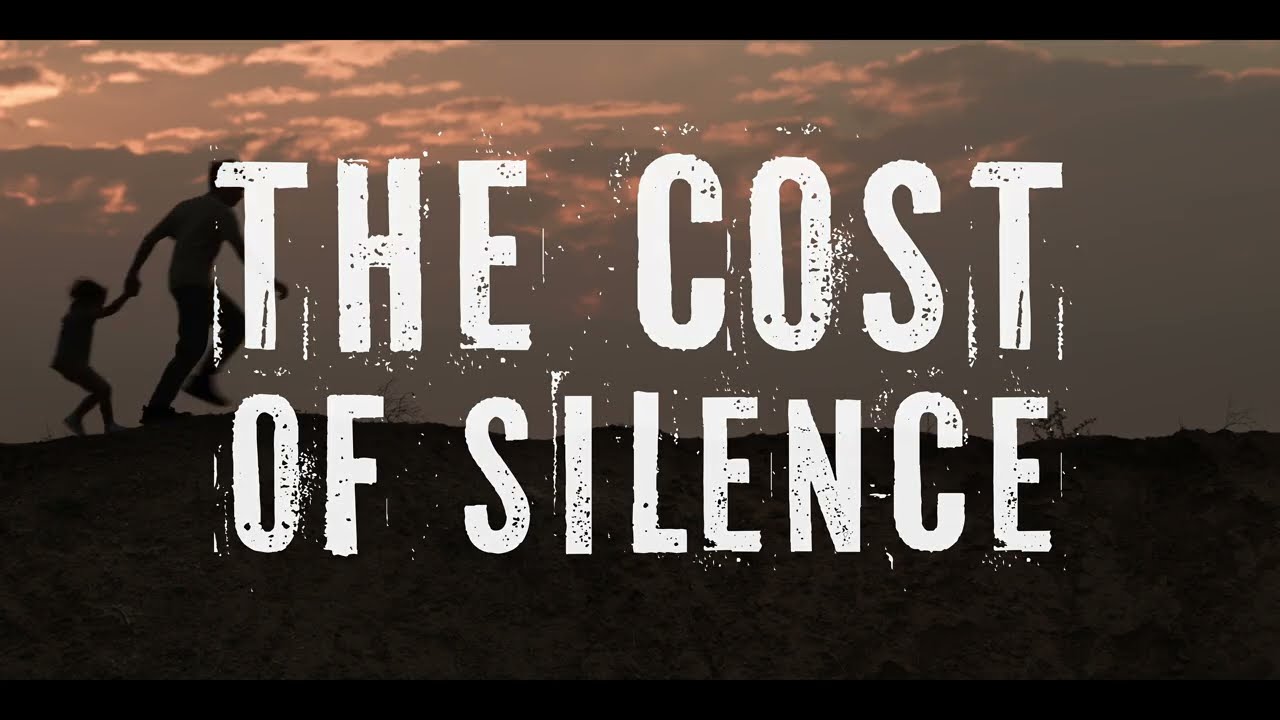
The film is “The Cost of Silence,” directed by cinematographer Daniel Angulo and survivor-advocate Kim Kelley, produced in partnership with The Ranch TX, and submitted to the 2026 Musicbed Challenge. Graphic imagery does not appear here. Shock tactics also stay off-screen. Instead, atmosphere, restraint, and the voice of a survivor carry the piece — a survivor who now trains the law-enforcement officers tasked with disrupting the trade.
The premise is one sentence long: without survivor-led, trauma-informed training, the agencies trying to rescue trafficking victims keep missing the people they’re trying to save.
Importantly, this is the awareness article those organizations asked for. It explains what the film says, who made it, what survivor-led law enforcement training actually does, and — most importantly — what readers can do next.
Why Human Trafficking Awareness Matters Now
Human trafficking awareness is not abstract. As of 2022, roughly 27.6 million people live in forced labor or sexual exploitation worldwide, and the United States is a top destination country. However, awareness alone does not stop traffickers. Therefore, awareness must translate into trained eyes — at truck stops, at hotels, in emergency rooms, on school campuses, and in patrol cars.
Moreover, the gap between awareness and action is exactly what The Cost of Silence targets. The film argues that human trafficking awareness becomes useful the moment it reaches the people who can intervene. As a result, survivor-led training has emerged as the most effective bridge between public concern and operational rescue.
Watch “The Cost of Silence” (4:07)
If the video does not load, watch it directly on YouTube: Cost of Silence — Short Film — Musicbed Challenge 2026.
What the Film Says About Human Trafficking Awareness
The film does more than describe human trafficking awareness — it argues for a specific change in how law enforcement trains for it. Therefore, the heart of the piece is a survivor walking officers through the way a victim actually presents in a traffic stop, hospital, or hotel lobby.
The film opens on a survivor’s voice and then keeps her at the center. Kim Kelley — the on-screen storyteller — was born and raised inside an international religious sect that her testimony and federal sources describe as one of the most documented child-abuse-and-trafficking environments of the last fifty years. The film does not narrate her trauma. It narrates what she does with it now.
The central argument is direct: human trafficking is not a single-layer problem. It is a coordinated network of recruitment, transportation, control, monetization, and concealment.
The Film’s Core Argument
Disrupting that network requires coordinated counter-strategy — interagency collaboration, tactical readiness, and a deep working understanding of victim psychology. The film argues, and a growing body of practitioner literature agrees, that survivor-led, trauma-informed training is the missing piece in most current law-enforcement curricula.
Specifically, officers who can clear a building under fire are often not trained for the precise five minutes after the door comes down: the recovery, the interview, the disclosure, the medical handoff, the chain of custody, the relocation. Those minutes decide whether a rescue becomes an outcome.
The film is short and intentional. Its production credits are short too: Daniel Angulo (cinematographer and co-director), Kim Kelley (co-director and on-screen guide), Brandon Brumfield (editor), Elmer Portillo (graphics), Chad Timney (producer).
The on-screen “operators” are real instructors and operators: Mike, Kirk Scheel, Monty Johnson, RL Gonzalez, Preston Garcia, Mike Slaughter, and Jason Beard. The antagonist cast — Edgar Gonzalez, George Adame, David Hernandez — is theatrical, but the scenarios they portray are drawn from documented case patterns.
Production was anchored at The Ranch TX, the 300-acre tactical training facility one hour south of San Antonio.
The film closes on a line that does most of the work the article cannot:
Silence has a cost — and children are paying it.
Why Survivor-Led Training Is Central to Human Trafficking Awareness
The phrase “trauma-informed” gets used loosely in policy literature. The film and the practitioners behind it use it the way the Police Chief Magazine and the DOJ Office for Victims of Crime use it: as a defined operational discipline that changes how officers approach victims, witnesses, suspects, and evidence at every step of a trafficking response.
Three concrete shifts a trauma-informed framework makes inside an investigation:
What Survivor-Led Trafficking Training Actually Looks Like
- The first interview. A trafficking victim who has lived months or years under coercive control often does not present as a victim. They may deny their own situation, defend their trafficker, refuse medical care, give a false name, give the trafficker’s name as a family member, or carry forged documents. An officer who approaches the interview as adversarial — the way a standard suspect interview is taught — will lose the disclosure. A trauma-informed first interview is taught around safety cues, slow consent, language access, and pacing. Disclosure follows safety. It cannot be compelled.
- Victim psychology and trauma bonding. Trafficking victims frequently exhibit trauma bonds with the people who exploit them. Officers who do not understand this dynamic interpret it as compliance with the criminal enterprise and miss the rescue. Trauma-informed training teaches the signs of a bond and how to interrupt it without retraumatizing the person it is binding.
- Chain-of-custody for survivors, not just evidence. Standard tactical training treats evidence handoff as the priority. Trauma-informed training treats the victim’s medical, psychological, and housing handoff with the same rigor — because a victim who returns to the same environment within 48 hours often returns to the same trafficker. The chain of custody for a person is a real concept, and the film makes the case for it.
Survivor-led instruction is the second half of the formula. A survivor in the classroom — when they choose to teach and have been prepared to teach — closes a gap that case studies and academic literature cannot.
They communicate the interior of the experience: how recruitment actually happens, what coercion sounds like in conversation, what concealment looks like at a traffic stop, what disclosure feels like in a clinic. The officers in the room who go on to lead trafficking response units carry that calibration into every door they kick.
This is the training “The Cost of Silence” is asking the field to fund, host, and complete.
Who Is Kim Kelley?
Kim Kelley sits at the center of modern human trafficking awareness — not because she chose the spotlight, but because she lived it for the first 20 years of her life and refused to let it stay invisible.
Kim Kelley is a survivor of organized child trafficking inside a religious sect, the founder of Digital Defenders United, a 501(c)(3) nonprofit she launched in July 2024, and a strategic leader at The Ranch TX. Her current work splits across three lines.
- Digital Defenders United is a survivor-led nonprofit focused on protecting children in the digital age. The organization works with law-enforcement agencies, technology companies, and policymakers to translate survivor experience into safeguard design, public education, and policy advocacy. Its public site is digitaldefendersunited.org.
- The Ranch TX strategic leadership role lets her embed survivor-led, trauma-informed instruction into the field-based training programs delivered to law-enforcement, military, and security teams that train at the ranch. Her remit there includes child recovery operations, surveillance and counter-surveillance methodology, and medical-research initiatives connected to victim handoff. Her bio is on the Digital Defenders United team page.
- Public speaking and federal training. Kim has spoken on podcasts, on the Voices for Voices program, on industry panels, and trains federal agents directly on trauma-informed interview, disclosure handling, and family-system trafficking dynamics. Her personal site is thekimkelley.com.
She is the through-line of the film and of the training program it advocates for.
Who Is The Ranch TX?
The Ranch TX is one of the few Tier-1 training facilities that pairs trauma recovery with public human trafficking awareness work. Consequently, its leadership carry both lived experience and a public platform.
The Ranch TX is a 300-acre tier-1 tactical training facility approximately one hour south of San Antonio, in Dilley, Texas. It serves military, law-enforcement, executive-protection, and qualified civilian students with scenario-based, immersive courses across firearms, close-quarters battle, vehicle mobility, night operations, K9, firefighter cross-training, security operations, and medical research.
The on-site infrastructure includes the USA’s largest commercial live-fire shoothouse, 14 shooting ranges, vehicle mobility tracks, urban training areas. The facility doubles as a content-production venue used for editorial and broadcast work — which is how a project like “The Cost of Silence” can be shot on the ground where the operators actually train.
The Ranch is the production partner of record on the film. They are also the partner sponsors of the Silencer Central 100 Days of Silence campaign running across the Popular Suppressors network through July 25, 2026 — a separate but related initiative whose audience overlaps closely with the people this awareness film is trying to reach.
Find The Ranch TX online:
- Website: ranchtx.org
- Law-enforcement training: ranchtx.org/law-enforcement-training
- Team: ranchtx.org/team
- YouTube: @theranchtx
- X / Twitter: @The_Ranch_Texas
- Instagram: @the_ranch_texas
- LinkedIn: The Ranch Texas
- Facebook: The Ranch Texas
Human Trafficking Awareness: How to Recognize the Signs
Effective human trafficking awareness begins with pattern recognition. Although every case differs, victims tend to share a constellation of physical, behavioral, and environmental cues that, taken together, justify a call. As a result, the federal training materials below are organized around the cues you can actually see in public.
Most trafficking is invisible to people who do not know the signs. Awareness training distilled from the National Human Trafficking Hotline and the DHS Blue Campaign flags a short list of patterns that, in combination, should trigger a call to the hotline.
Behavioral indicators:
- A person appears under the control of another individual who answers for them, holds their identification, or interrupts their answers.
- A person cannot or will not say where they live, where they work, or how long they have been in the area.
- Long hours for little or no pay, lives at the workplace, or sleeps in shifts with multiple unrelated adults.
- A minor is in the company of an older non-relative whose relationship to them cannot be explained credibly.
- A person shows signs of physical abuse, malnourishment, untreated injuries, or branding-style tattoos.
Environmental indicators:
- A residential or commercial location has security features facing inward — locked-from-outside doors, covered windows, barbed wire — rather than facing outward against intruders.
- A business operates with cash-only transactions, long hours, multiple workers living on-site, and minors present at non-school hours.
- Online listings for personal services that route through encrypted messaging apps, change phone numbers frequently, and use travel-rotation language (“new in town,” “fresh,” “available this week only”).
A combination of indicators is what triggers a report. A single sign is rarely conclusive, and trafficking-response professionals discourage public confrontation. If you suspect trafficking, do not approach. Call the hotline, give your observations, and let trained responders handle the contact.
How to Report Suspected Trafficking
Effective human trafficking awareness requires knowing the reporting pipeline before the moment arrives. In addition, calling early — even on a hunch — preserves the chain of evidence investigators need.
| Channel | Contact | Use it for |
|---|---|---|
| National Human Trafficking Hotline | 1-888-373-7888 · text “HELP” to 233733 · humantraffickinghotline.org | Suspected adult or child trafficking; victim resources; survivor support |
| CyberTipline (NCMEC) | 1-800-843-5678 · report.cybertip.org | Online child exploitation, child sexual abuse material, online enticement |
| DHS Blue Campaign | 1-866-347-2423 · dhs.gov/blue-campaign | Suspected trafficking activity for federal investigation referral |
| FBI | 1-800-225-5324 · tips.fbi.gov | High-confidence trafficking tips; interstate or international |
| 911 | 911 | Immediate safety threat or rescue in progress |
If you are the person in danger and can place a call safely, the hotline can connect you to local resources, transportation, shelter, legal aid, and medical care. If you can text but cannot speak, text HELP to 233733.
How to Support Human Trafficking Awareness Work
Sustained human trafficking awareness depends on funding the people doing the slow, unglamorous work. Moreover, survivor-led trainers, residential programs, and the law-enforcement task forces that field the calls all need sustained financial support to operate at scale.
Notably, the film closes with a request: “If you believe in protecting children, advancing real solutions, and supporting those on the front lines, please share this film.” The five most useful things a reader can do:
- Share the film. Send the YouTube link to your local sheriff’s office, school resource officers, county prosecutor, fire chief, school principal, and faith-community leadership. In short, survivor-led training is not on most agencies’ radar until somebody puts it there.
- Donate to Digital Defenders United. Kim Kelley’s 501(c)(3) funds survivor-led curriculum, federal-agent training scholarships, and policy work. Direct: digitaldefendersunited.org.
- Send LEO leadership to The Ranch TX. The Ranch’s law-enforcement training programs increasingly integrate trauma-informed modules. If you sit on a budget committee, a sheriff’s department training board, or a city council, this is where dollars move the needle.
- Save the National Human Trafficking Hotline in your phone. 1-888-373-7888. Text HELP to 233733. You will likely never use it. The one time you do, you will be the person in the room who knew the number.
- Follow the people doing the work. Daniel Angulo on YouTube @dangulol, The Ranch TX on YouTube @theranchtx, Kim Kelley at thekimkelley.com. Awareness compounds the same way training does — incrementally, in the direction it is pointed.
Frequently Asked Questions
Below, we answer the most common questions readers ask about The Cost of Silence and human trafficking awareness. Furthermore, each answer cites the federal resource where you can verify the underlying data.
What is “The Cost of Silence”?
“The Cost of Silence” is a four-minute short film released April 27, 2026, directed by Daniel Angulo and Kim Kelley, produced by Chad Timney, and submitted to the 2026 Musicbed Challenge. It is an awareness piece about human trafficking and the role survivor-led, trauma-informed training plays in effective law-enforcement response.
Where can I watch it?
On YouTube: Cost of Silence — Short Film — Musicbed Challenge 2026. The film is free, embed-friendly, and 4 minutes 7 seconds long. It uses no graphic imagery.
Who is Kim Kelley?
Kim Kelley is a survivor of organized child trafficking inside a religious sect, the founder of Digital Defenders United (a 501(c)(3) nonprofit), a strategic leader at The Ranch TX, and a federal-agent trainer on trauma-informed trafficking response.
What is The Ranch TX?
The Ranch TX is a 300-acre tier-1 tactical training facility one hour south of San Antonio, Texas, that trains military, law-enforcement, executive-protection, and qualified civilian students across firearms, mobility, CQB, K9, medical, and now trauma-informed trafficking-response disciplines.
About the Film and the People Behind It
What is survivor-led, trauma-informed training?
A defined training discipline that places trafficking survivors in the instructional role for officers, investigators, and clinicians who will respond to trafficking cases. The discipline reshapes interview technique, disclosure handling, victim chain-of-custody, and post-rescue continuity to align with how trafficking victims actually present in the field.
How do I recognize human trafficking?
A combination of behavioral and environmental indicators — control of identification, inability to describe one’s living situation, inward-facing security features, cash-only operation with minors present, and signs of physical abuse or malnourishment. A single sign is rarely conclusive. A combination warrants a call to 1-888-373-7888.
Who do I call if I suspect trafficking?
The National Human Trafficking Hotline at 1-888-373-7888 (text HELP to 233733). For online child exploitation, the NCMEC CyberTipline at 1-800-843-5678. For an active rescue situation, call 911.
How can I support this work?
Share the film, donate to Digital Defenders United, advocate for survivor-led training at your local sheriff’s office or city council, save the trafficking hotline in your phone, and follow the people doing the work.
Editorial Note
Freedom’s Lodge covers human trafficking awareness as a rights-and-rescue issue, not a political one. Consequently, our reporting standards on this beat mirror the ones we apply to any rights story: primary sources, named experts, and the federal data behind every claim.
This article was written from publicly available sources: the film itself, the YouTube description, The Ranch TX website, Digital Defenders United’s public bio of Kim Kelley, and federal resources from the National Human Trafficking Hotline (Polaris Project) and the DHS Blue Campaign. No private information about trafficking victims, ongoing investigations, or operator identities was solicited or used. Freedom’s Lodge does not provide legal advice; consult counsel for jurisdiction-specific questions about reporting obligations.
If you are reading this because you are in trouble: call 1-888-373-7888 or text HELP to 233733. There is help. There is a way out. There is a person on the other end of that number whose entire job is the next call.
You may also be interested in
Two adjacent Freedom’s Lodge pieces that round out the civic-engagement picture this story sits inside:
- Wolford v. Lopez: How the Case Reshapes Concealed Carry Laws — the Ninth Circuit ruling that redrew the line between “sensitive places” and constitutional carry, and what it means for permit holders crossing state lines.
- ATF New Era of Reform: How to Comment Before Aug. 4 — the open public-comment window on ATF rulemaking, the specific changes on the table, and the language that gets a comment counted instead of binned.
Sources
- Cost of Silence — Short Film — Musicbed Challenge 2026 (Daniel Angulo and The Ranch Texas, April 27, 2026)
- The Ranch TX — facility, training, team
- Digital Defenders United — Kim Kelley founder bio and mission
- Kim Kelley personal site
- National Human Trafficking Hotline (Polaris Project)
- DHS Blue Campaign
- NCMEC CyberTipline
- DOJ Office for Victims of Crime — Human Trafficking Training
- Police Chief Magazine — A Trauma-Informed Approach to Labor & Sex Trafficking
If you found this useful, share it with one person who works in or around law enforcement. That is the single highest-leverage thing this article can do.
Schema & Methodology
This article includes structured data for Google and the major LLMs. Below, the JSON-LD schema describes the film, the organizations, and the people involved.
Reader Favorites
- Hot Take: Viridian V-Series Long-Range Illuminators
- Officer Justifiably Shoots Good Guy: Lessons For Armed Citizens
- Honored American Veterans Afield & NSSF Raise Funds For Disabled Vets
- Be Your Own AR-15 Armorer With This Kit
- Mossberg Celebrates Century With New CCW Pistol
- CCW Central: Check Out Concealed Carry Expo this May in Pittsburgh
Gun-owner reference desk
Plain-English references worth bookmarking — NFA rules, carry law, and the gear terms behind every review.
| 2026 at a glance | |
|---|---|
| NFA tax stamp | $0 |
| Permitless carry | 29 states |
| Suppressors legal | 42 states |
50+ NFA, carry and gun-law terms in plain English, updated for 2026.
Open the glossary → Network| Term | Category |
|---|---|
| Striker-fired | Action |
| MOA | Optics |
| Twist rate | Ballistics |
30 gun, ammo and optics terms, from Guns & Gadgets Daily.
View full chart →