Federal Public Comment Firearms 2026: Complete Filing Guide
A federal public comment is the one mechanism that lets a single gun owner shape the language of a firearms regulation before it takes effect.
Most gun owners will never file a federal public comment firearms rulemaking, and the handful who do end up shaping the rules for everybody else. As an FFL and 07/02 manufacturer, I have lived under every rule in the case studies below, and I have read the comment-response sections where the ATF had to answer people who did their homework. So here is what the law actually requires of the agency, what a comment does and does not change, how to write one that gets quoted in a final rule preamble, and the case studies (brace rule, bump stocks, engaged-in-the-business, ghost guns) that prove the mechanism works.
Updated September 8, 2026.

Why a Comment Actually Moves an Agency
The Administrative Procedure Act, 5 U.S.C. § 553, requires federal agencies to follow a specific process when issuing substantive regulations. The process has three core steps: (1) publish a Notice of Proposed Rulemaking (NPRM) in the Federal Register, (2) allow a public comment period (typically 30 to 60 days, occasionally 90), and (3) issue a final rule that responds to “significant, relevant” comments in the rule’s preamble.
That third step is the leverage. Under Motor Vehicle Manufacturers Ass’n v. State Farm Mutual Auto Ins. Co., 463 U.S. 29 (1983), an agency must “examine the relevant data and articulate a satisfactory explanation for its action,” and failure to respond to significant comments is grounds for vacating the rule. The most recent firearms-rule litigation, Mock v. Garland (Fifth Circuit, 2024, brace rule), Garland v. Cargill (Supreme Court, 2024, bump stocks), VanDerStok v. Garland (Supreme Court, 2025, ghost guns), all involve some piece of the agency failing to follow APA process.
So a comment does two jobs at once. First, it tries to persuade the agency. Second, and this is the bigger one, it builds the administrative record a court will read if the rule is later challenged.


What the Law Requires of the Agency
Under 5 U.S.C. § 553(c), the agency must:
- Give interested persons an opportunity to participate in the rulemaking through submission of written data, views, or arguments.
- Consider the relevant matter presented.
- Incorporate in the rules adopted a concise general statement of their basis and purpose, the “preamble” that addresses public comments.
What the agency is NOT required to do: count comments and side with the majority; answer every comment one by one (it can group similar comments); adopt commenter recommendations; or hold a public hearing unless the underlying statute requires one.
The agency’s discretion to interpret “significant” and “relevant” is where most rulemaking battles are won and lost. A comment the agency can reasonably file under “general policy opposition” gets a one-paragraph brush-off. A comment the agency cannot brush off, because it cites specific record evidence, identifies a specific factual error, or proposes specific alternative regulatory text, requires a substantive response.
The Five-Part Structure
The official regulations.gov guide identifies five components of an effective public comment. Federal firearms rulemaking dockets, from the 2018 bump stock rule through the 2026 brace rescission, show which sections agencies actually quote in final rule preambles. Use this structure:
1. Introduction
Identify yourself by relevant experience, not by political position. A 20-year FFL is a different witness than a first-time NFA buyer. The agency reviewer assigns weight based on your specific perspective.
2. Background
Cite the specific NPRM you are commenting on. Include the Federal Register document number, the RIN (Regulatory Information Number), and the page numbers of the specific section you are addressing. That citation alone tells the agency reviewer you read the rule, not just a headline.
3. Analysis
This is the section that gets quoted. Your argument and your evidence. Cite sources. Cite the rule itself. Identify specific factual claims the agency made in the NPRM that you believe are wrong, with the evidence supporting your position. The analysis section in a 600-word comment is typically 300-400 words.
4. Recommendations
Tell the agency precisely what regulatory text you want. “Strike paragraph (b)(2) of proposed 27 CFR 478.11 and replace with the following language…” gets read. “Don’t do this” does not.
5. Conclusion
Two or three sentences. Recap your position. Re-state your recommendation. Sign your name.
Total length: 500-800 words. One page. Multiple pages of citations and exhibits are fine and frequently effective. Stream-of-consciousness commentary is not, no matter how good it felt to write.
The Four Dockets Open in Mid-2026
- RIN 1140-AA55 / FR Document 2026-08930 — Brace rescission. Comment window closed June 5, 2026; no final rule yet.
- RIN 1140-AA87 — Youth Handgun Safety Act notice rescission. Closed early June 2026; no final rule yet.
- RIN 1140-AA70 / FR Document 2026-08915 — NFA marker rule. Closed early July 2026; no final rule yet.
- RIN 1140-AA94 / FR Document 2026-09158 — Electronic recordkeeping. Closed August 6, 2026; no final rule yet.
For the full picture on the deregulatory package these dockets are part of, our breakdown of the ATF new era of reform covers all 34 rule changes.
Case Study 1: The 2018 Bump Stock Rule
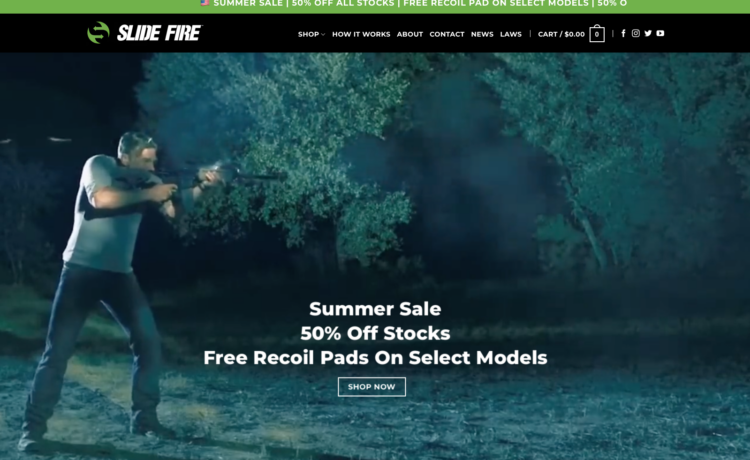
In December 2018, ATF issued Final Rule 2018R-22F, classifying bump stocks as machine guns under the National Firearms Act. The NPRM had drawn over 119,000 public comments. The final rule preamble dedicated a full section to comment analysis, organized by argument category: statutory authority, technical operation, retroactivity, takings clause, due process.
The agency rejected every substantive argument and issued the rule. Owners with bump stocks had 90 days to destroy them or surrender them to ATF. No compensation.
Now, here is the part that matters. The public-comment record, specifically the statutory-authority arguments, became the foundation of Cargill v. Garland. The Supreme Court in 2024 ruled 6-3 that bump-stock-equipped semiautomatic rifles do not satisfy the statutory definition of “machine gun” under 26 U.S.C. § 5845(b). The Court’s majority opinion cited the same statutory-text arguments that commenters had raised in 2018 and the agency had rejected.
The 2018 commenters did not win at the agency. They won at the Supreme Court six years later, and the record the Court read was the one their comments built.
Case Study 2: The 2023 Brace Rule and Worksheet 4999
The 2021 brace NPRM (Docket 2021R-08) proposed a point-based classification system, “Worksheet 4999,” that would assign points to various design features of a brace-equipped pistol to decide whether the firearm was a rifle (and therefore an SBR under the NFA). The point system was technical, complicated, and produced inconsistent classifications when commenters applied it to specific real-world braces.
Per the 2023 final rule preamble (88 FR 6480): “After careful consideration of the comments received regarding the complexity in understanding the proposed Worksheet 4999 and the methodology used in the Worksheet to evaluate firearms equipped with a ‘brace’ device, this final rule does not adopt some aspects of the approach proposed in the NPRM, specifically the Worksheet 4999 and its point system.”
Basically, technical commenters killed the worksheet. They did not kill the rule, but they cut the worksheet out of it. That is a measurable comment-level win in a docket that mostly produced an unfavorable final rule.
Case Study 3: Engaged-in-the-Business
The 2024 “Engaged in the Business” rule expanded ATF’s interpretation of when a private firearm seller had to obtain a Federal Firearms License. Per the May 6, 2026 Interim Final Rule rescinding parts of the 2024 rule (FR 2026-08919), ATF acknowledged that the 2024 specifying provisions had not produced the FFL application increases, civil forfeitures, or other enforcement metrics the agency projected. The Federal Register text of the 2026 rescission cites the 2024 comments that warned the rule’s vague triggering language would chill lawful private sales without producing meaningful enforcement against actual unlicensed dealers.
The 2024 commenters who flagged the vagueness problem are quoted, in effect, in the 2026 rescission preamble. Two years apart. Comments work on geological time, but they work.
What Kinds of Arguments Move Agencies
I built this piece by reading the comment-response sections of three firearms rulemakings, the 2018 bump stock final rule (Docket ATF 2017R-22F), the 2023 brace rule (Docket 2021R-08F), and the 2024 engaged-in-the-business rule (Docket 2022R-17F), and tracing each agency response back to the comment category that produced it. Across the bump stock, brace, engaged-in-business, and ghost-gun dockets, the arguments that produced agency response and citation fall into four categories, and they are not somebody’s academic framework. They are the four categories the ATF itself sorted comments into.
Statutory authority arguments
The agency’s rule must trace to a specific statutory grant of authority. Comments that identify a mismatch between the proposed rule and the statute force the agency to either defend the statutory link or narrow the rule. These are the most powerful comment arguments because they map straight onto litigation theory.
Cost-benefit analysis errors
Agencies must perform a Regulatory Impact Analysis. Comments that show the agency’s RIA undercounts the affected population force the agency to revise the RIA or defend it. Courts read RIAs on APA review.
Technical operational defects
Comments that show the proposed rule produces inconsistent or absurd results when applied to specific real-world cases. The Worksheet 4999 fight was won here.
Constitutional arguments
After Bruen (2022), every modern firearms regulation must trace to a relevantly similar historical tradition. Comments that identify a missing historical analog build the constitutional record.
Remember, when you sit down to write yours in 2026: write to one of those four categories.
What Does NOT Move Agencies
- “I oppose this rule” with no analysis.
- Form letters identical to thousands of other comments.
- Personal attacks on agency staff.
- Arguments about a different rule.
- General policy positions without specific regulatory-text recommendations.
- Anonymous comments without an identified commenter.
Where to Find the Docket
Every federal rulemaking docket lives at regulations.gov. The site is searchable by RIN, by Federal Register document number, by agency, and by keyword. Bookmarks worth keeping:
- ATF rulemaking landing page at atf.gov/rules-and-regulations/federal-register-actions/rulemaking
- Open ATF dockets at regulations.gov — filter by Agency = “Alcohol, Tobacco, Firearms and Explosives Bureau (ATF)” and Status = “Open for Comment.”
- Federal Register search at federalregister.gov/agencies/alcohol-tobacco-firearms-and-explosives-bureau
Frequently Asked Questions
How long does an agency have to respond to a federal public comment firearms filing?
There is no clock on your individual comment. The agency answers significant, relevant comments in the preamble of the final rule, whenever that comes; the 2018 bump stock final rule came about 11 months after comments closed.
Can I submit a federal public comment firearms filing anonymously?
Half of it. Your address, city, state, ZIP, and phone stay hidden on regulations.gov. Your name and every word of your comment go public, so write it like your name is on it, because it is.
Does my federal public comment firearms filing get sent to my representatives in Congress?
No, it lands in the rulemaking docket and stays there. File the comment first, then send a copy to your Senators and Representative yourself.
Can a federal public comment firearms filing make a rule go away?
At the agency level, almost never. What comments do all the time is get a specific provision changed, cut, or tightened up, and they build the record a court reads later, which is how the bump stock rule actually died.
Are there templates for a federal public comment firearms filing?
Yes. The official regulations.gov guide and the Protect Democracy guide both follow the five-part structure above, so start with either one and fill in your own experience.
The Calendar for the Rest of 2026
- June 5, 2026 — Brace rescission comment window closed.
- Early June 2026 — Youth Handgun Safety Act notice and Engaged in the Business comment windows closed.
- Early July 2026 — NFA marker rule comment window closed.
- August 6, 2026 — Electronic recordkeeping comment window closed.
- Summer-fall 2026 — Form 4473 modernization, NFA electronic signature ruling, CLEO notification removal expected to publish.
Final Thoughts
A public comment is the lowest-cost, highest-leverage tool a single gun owner has to shape federal regulation. It is the one place the agency is legally required to read what you wrote and answer your argument in writing. It is the record a federal court will later use to decide whether the agency followed the law.
The four argument categories that move agencies are statutory authority, cost-benefit, technical operational defect, and constitutional analysis. The five-part structure is introduction, background, analysis, recommendations, conclusion. The four dockets from the May 2026 package were brace, Youth Handgun Safety Act notice, NFA marker, and electronic recordkeeping. All four comment windows have closed as of September 2026, and none has a published final rule yet.
One filed comment is worth more than 10,000 retweets. Trust me. If you have filed a comment on a past ATF rulemaking docket, reply on X to @therealxdman with your docket RIN and the argument you raised.
Last updated September 8, 2026. Primary sources: Administrative Procedure Act, 5 U.S.C. § 553; Motor Vehicle Manufacturers Ass’n v. State Farm Mutual Auto Ins. Co., 463 U.S. 29 (1983); 2018 bump stock final rule preamble; 2023 brace rule preamble (88 FR 6480); 2024 engaged-in-business rule preamble; 2026 ATF “New Era of Reform” Federal Register documents 2026-08930, 2026-08919, 2026-08926, 2026-08915, 2026-09158.


Reader Favorites
- Honored American Veterans Afield & NSSF Raise Funds For Disabled Vets
- Facing NRA Lawsuit, San Francisco Says “Uncle”
- Virginia’s Gun-Hating Governor vs. Virginia
- Los Angeles Gun-Grabbers Confused, Terrified by Bill of Rights
- Why Do Anti-Gunners Love Red Flag Laws So Much?
- DOJ Study: Shove it Up Your Loophole, Gun-Grabbers
Gun-owner reference desk
Plain-English references worth bookmarking — NFA rules, carry law, and the gear terms behind every review.
| 2026 at a glance | |
|---|---|
| NFA tax stamp | $0 |
| Permitless carry | 29 states |
| Suppressors legal | 42 states |
50+ NFA, carry and gun-law terms in plain English, updated for 2026.
Open the glossary → Network| Term | Category |
|---|---|
| Striker-fired | Action |
| MOA | Optics |
| Twist rate | Ballistics |
30 gun, ammo and optics terms, from Guns & Gadgets Daily.
View full chart →