ATF Public Comment: How the May 6 Brace Rescission Comment Period Played Out
The brace rescission comment window closed June 5, 2026; it and three other dockets in the same package had no final rule as of September 2026.
Most gun owners treat an ATF public comment like a survey: log on, tick “support,” log off. I have read enough final rule preambles to know that is a wasted twenty minutes. The comments that actually move a final rule are the ones that look more like a one-page legal brief than a yard sign, and the agency’s own rulemaking record proves it. The window on the May 6, 2026 stabilizing-brace rescission closed June 5, three other firearms dockets from the same package have since closed too, and here is what worked, what did not, and where the four dockets stand now that every window is shut.
Updated September 8, 2026.
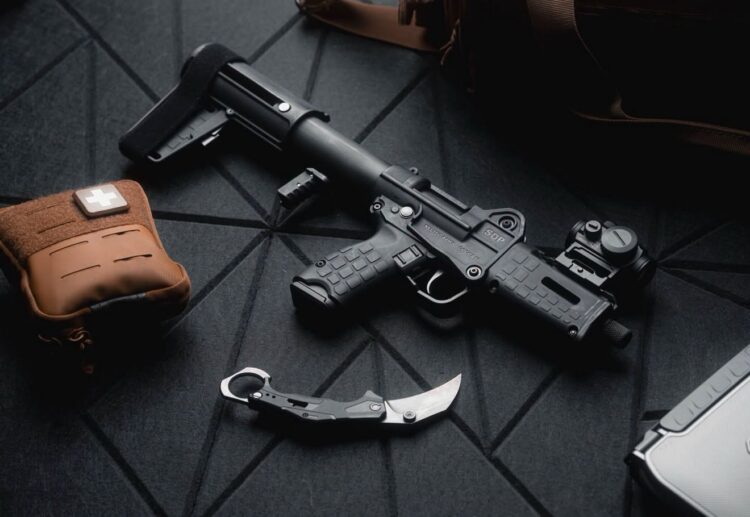
Image courtesy of XDMAN
What a Public Comment Actually Is
An ATF public comment is a written submission to a federal agency in response to a Notice of Proposed Rulemaking (NPRM) under the Administrative Procedure Act, 5 U.S.C. § 553. The agency must publish the proposed rule in the Federal Register, allow a public comment window (typically 30 to 60 days), and, under settled administrative law, respond to “significant, relevant” comments in the preamble of the final rule. Failure to do so is one of the most reliable grounds for a court to vacate the rule on APA review.
That last sentence is the leverage. When a federal court strikes down an agency rule, it is almost never because the court disagreed with the agency’s policy. It is because the rule failed an APA test: arbitrary-and-capricious review, failure-to-respond, insufficient cost-benefit analysis. Public comments build the record courts later read.


Why Most Comments Are Wasted
Per the official guide at regulations.gov, “multiple identical comments are not likely to be more persuasive than if the comment had been sent only once.” Agencies group form letters and treat them as a single weighted vote. The agency’s response to a form-letter campaign is a single paragraph in the final rule preamble. The agency’s response to a substantive, specific, sourced comment is its own paragraph, sometimes its own section.
The 2023 brace rule (Docket 2021R-08F) is the cleanest example. ATF received thousands of comments on the 2021 NPRM. The vast majority were “oppose this rule.” The agency’s response in the final rule preamble: a single section. But the technical comments on Worksheet 4999 (the point-system the agency wanted to use to classify brace-equipped pistols) produced specific, named responses, and the worksheet was dropped from the final rule. Per the Federal Register text: “After careful consideration of the comments received regarding the complexity in understanding the proposed Worksheet 4999 and the methodology used in the Worksheet to evaluate firearms equipped with a ‘brace’ device, this final rule does not adopt some aspects of the approach proposed in the NPRM.”
Basically, the technical comments killed the worksheet. The form letters did not.
The Five-Part Structure That Works
The regulations.gov official guide identifies five components of an effective comment. The 2023 brace docket shows which sections agencies actually read:
- Introduction. Who you are, why you care, what experience you bring. A first-time NFA buyer commenting on the brace rule is a different witness than a 20-year FFL holder commenting on the same rule (I am the second one, and I still keep it short). Establish the specific perspective.
- Background. Identify the exact part of the rule you are commenting on. Cite the Federal Register document number (e.g., 2026-08930 for the brace NPRM), the RIN (1140-AA55), and the specific regulatory text section (e.g., 27 CFR 478.11). This is what lets an agency reviewer file your comment correctly.
- Analysis. Your argument and your evidence. This is the section that gets quoted in the final rule. Cite sources. Explain how the rule (or the agency’s cost-benefit estimate) hits your specific situation, what the agency missed, what the unintended consequences are. The brace docket received hundreds of comments that read “I oppose this rule” and a few dozen that read “ATF’s own 2023 Regulatory Impact Analysis estimated 3 million braces in circulation, which conflicts with the 1.4 million figure cited elsewhere in the same rule.” Guess which ones got cited.
- Recommendations. What you want the agency to do instead. Not “rescind the rule.” Tell them precisely. “Strike paragraph (b)(2) and replace with the following language…” gets read. “Don’t do this” does not.
- Conclusion. Recap your position and recommendations. Short.
The whole comment can be one page. The brace docket’s most-cited comments were under 800 words. They were specific.
The Four Dockets — Where They Stand Now
As of September 2026, all four of these ATF rulemaking dockets have closed for comments. None has a published final rule yet:
- RIN 1140-AA55 / Document 2026-08930 — Removing Factoring Criteria for Firearms with Attached “Stabilizing Braces”. Comment window closed June 5, 2026; no final rule yet as of September 2026. The formal rescission of the 2023 brace rule. The comments here are about how the agency removes the regulatory language, not whether to remove it. Substantive comments shape the language of the final rescission.
- RIN 1140-AA87 — Removing Youth Handgun Safety Act Notice. Comment window closed early June 2026; no final rule yet as of September 2026. NPRM rescinding 27 CFR § 478.103 (the FFL handgun-purchaser notice). Comments most valuable from FFLs and FFL-association representatives.
- RIN 1140-AA70 / Document 2026-08915 — Allowing Makers To Adopt Certain Markings for National Firearms Act Firearms. Comment window closed early July 2026; no final rule yet as of September 2026. NFA marking requirements, relevant to anyone making a Form 1 SBR or filing Form 2 manufacturer paperwork.
- RIN 1140-AA94 / Document 2026-09158 — Firearms Electronic Record-Keeping. Comment window closed August 6, 2026; no final rule yet as of September 2026. The electronic A&D record proposal that decides how FFLs keep transaction records.
One more docket to watch: the “Engaged in the Business” revision (27P, Federal Register 2026-08919) is an Interim Final Rule that took effect immediately; its comment window closed in early June 2026, and it remains binding while ATF works toward a final-final position.
What a Comment Cannot Do
An ATF public comment is not a vote. It is not a poll. Agencies are not required to count comments and side with the majority. The Supreme Court has repeatedly held that public-comment processes are about substantive input, not democratic ratification. A docket with 50,000 form-letter “oppose” comments and 100 substantive “support” comments will not produce a withdrawn rule on the headcount alone. The agency response will note the volume of opposition and then engage with the substantive arguments, from either side.
What public comments can do, in order of impact:
- Force the agency to address specific arguments in the final rule preamble. This builds the administrative record that a court later reviews.
- Surface technical defects the agency had not considered. The 2023 brace worksheet is the case study. The worksheet died because technical comments built a record it could not survive.
- Create a basis for APA challenge if the agency fails to respond. A comment that the agency materially ignores is grounds for vacatur. This is how Mock v. Garland got the brace rule enjoined.
- Shift the political cost-benefit on the agency’s side. Agencies read their press too. A docket full of sourced, specific, professional comments is harder to wave off than a docket of one-line emotional reactions.
Brace Docket 2021 vs. Brace Docket 2026
The 2021 NPRM (Docket 2021R-08) opened June 10, 2021 and closed September 8, 2021, a 90-day window. The final rule (88 FR 6480) was published January 31, 2023, 18 months after the comment window closed. The final rule dropped Worksheet 4999 in direct response to comments. Other major comment categories, statutory authority, vagueness, disability accommodation, the agency addressed and rejected.
The 2026 NPRM (Document 2026-08930) opened May 6, 2026 and closed June 5, 2026, a 30-day window, the statutory minimum. Three things are different in 2026:
- The 2023 final rule has already been enjoined or vacated in most of the country. The 2026 comment is operating on a record where the courts have already handled many of the constitutional and APA arguments. Comments that re-argue Mock v. Garland are background; comments that address the language of the 2026 rescission are foreground.
- The agency posture is reversed. The 2021 docket was an agency arguing FOR a new restriction; commenters argued against. The 2026 docket is an agency arguing FOR a rescission; commenters now carry a different burden if they want to shape the language.
- The comment window is 30 days, not 90. Speed matters. Drafting on May 28 is too late.

How to File in Under 20 Minutes
- Go to regulations.gov. Search by RIN (e.g., “1140-AA55”).
- Click the docket. Read the NPRM. Identify the one or two sections you actually have something to say about.
- Draft a one-page comment using the five-part structure above. No profanity. No personal attacks on agency staff. ATF explicitly states it “may not consider, or respond to, comments containing excessive profanity.” Real bar, so save the colorful language for the range.
- File via the e-rulemaking portal. Include your full name and the docket RIN. Save the comment tracking number.
- Optional but high-leverage: email a copy to your state’s congressional delegation. Congressional pressure shifts agency calculus independently of the public-comment record.
One filed comment from a Form 4 applicant who knows the eForms portal is worth more than 10,000 retweets that say “the ATF should fix this.” The retweets stay on X. The comment goes into the administrative record.
Frequently Asked Questions
Can the ATF ignore an ATF public comment I file?
It can say no to you, but it cannot pretend you were never there. Under the Administrative Procedure Act the agency has to answer every “significant, relevant” comment in the final rule preamble, and skipping one hands a court a reason to vacate the rule. The agency does get to decide what counts as significant, which is why a sourced argument survives and a form letter gets lumped in with ten thousand others.
How long does an ATF public comment have to be?
One page. The comments that got cited in the 2023 brace docket ran 300 to 800 words, and the five-part structure (introduction, background, analysis, recommendation, conclusion) is what keeps you inside that.
Can I submit an ATF public comment anonymously?
Partly. Address, city, state, ZIP, and phone stay off the public docket on regulations.gov. Your name and every word in the body ARE published, so do not put anything in the comment itself that you would not want a stranger to read.
What happens after the comment window closes?
The agency reads, sorts, and drafts the final rule, answering the significant comments in the preamble. For the 2026 brace rescission that is expected to take 60-90 days from comment close.
Which 2026 ATF public comment dockets are most worth my time?
Owners: RIN 1140-AA55, the brace rescission, closed June 5. FFLs: RIN 1140-AA94, electronic recordkeeping, closed August 6. Form 1 SBR makers and small NFA manufacturers: RIN 1140-AA70, the NFA marker rule, closed early July.
What to Watch Next
The brace rescission comment window closed June 5. The Cekada-era ATF had signaled it intended to finalize rescissions within 60-90 days of comment close, which would have meant late summer 2026 — but as of September 2026, no final rule has published on the brace rescission, the Youth Handgun Safety Act notice, or the NFA-marker and electronic-recordkeeping dockets. All four remain pending. Our breakdown of the full ATF new era of reform package covers the upstream regulatory architecture.
The window is open for 21 more days on the most important docket of this regulatory cycle. The substantive comment you file this week shows up in the final rule preamble. The form letter you file the day before the deadline shows up in a footnote about volume. Take my advice and be the first kind. Have you filed a comment on a previous ATF rulemaking docket? Reply on X to @therealxdman with what you wrote and what the agency’s response was; we are building a base-rate record of which arguments actually moved the brace, bump stock, and engaged-in-business dockets.
Last updated May 15, 2026. Primary sources: Federal Register documents 2023-01001 (final brace rule, 88 FR 6480), 2026-08930 (brace rescission NPRM), 2026-08915 (NFA marker NPRM), 2026-09158 (electronic recordkeeping NPRM). Procedural guidance verified against the official Regulations.gov “Public Comment on Federal Regulations” guide and Administrative Procedure Act, 5 U.S.C. § 553.


Reader Favorites
- Hot Take: Viridian V-Series Long-Range Illuminators
- Officer Justifiably Shoots Good Guy: Lessons For Armed Citizens
- Honored American Veterans Afield & NSSF Raise Funds For Disabled Vets
- Be Your Own AR-15 Armorer With This Kit
- Mossberg Celebrates Century With New CCW Pistol
- CCW Central: Check Out Concealed Carry Expo this May in Pittsburgh
Gun-owner reference desk
Plain-English references worth bookmarking — NFA rules, carry law, and the gear terms behind every review.
| 2026 at a glance | |
|---|---|
| NFA tax stamp | $0 |
| Permitless carry | 29 states |
| Suppressors legal | 42 states |
50+ NFA, carry and gun-law terms in plain English, updated for 2026.
Open the glossary → Network| Term | Category |
|---|---|
| Striker-fired | Action |
| MOA | Optics |
| Twist rate | Ballistics |
30 gun, ammo and optics terms, from Guns & Gadgets Daily.
View full chart →