Are Suppressors Legal? A State-by-State Guide for 2026
Civilians can legally own a suppressor in 42 states. Eight states and the District of Columbia still ban them outright, whatever federal law allows.
Are suppressors legal? In most of the country, yes, and I should know, because as an 07/02 manufacturer I build them. Civilians can legally own a suppressor in 42 states. Eight states plus the District of Columbia still ban them outright. If you live outside those nine places, federal law lets you own one, and a major 2026 court ruling is now stripping away the registration paperwork that used to come with it.
Below is the plain-English map: where suppressors are legal, where they are not, and what changed this year.

Federal Law
Federal law has allowed private suppressor ownership for decades. Suppressors sit under the National Firearms Act, the 1934 law that also covers short-barreled rifles and machine guns.
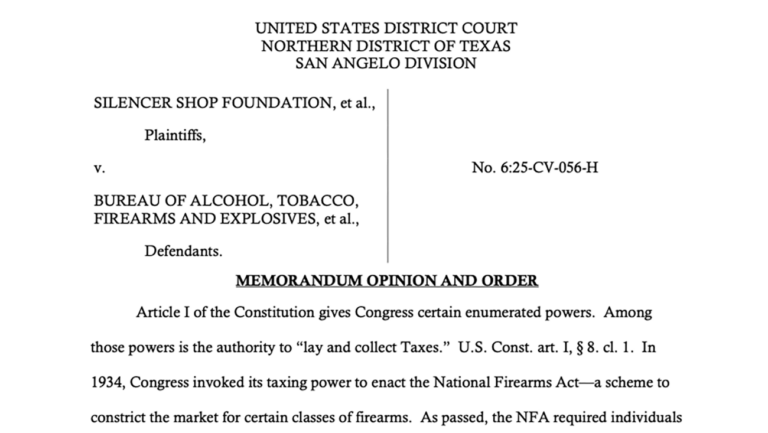
For 90 years, that meant paperwork. You registered the suppressor with the ATF, submitted fingerprints and photos, and paid a $200 tax. Then two things changed. First, Congress set the suppressor tax to $0 on January 1, 2026. Second, a federal court in August 2026 struck down the registration scheme itself for covered buyers, a shift we break down in the recent ruling striking down NFA registration.

The 9 Places Where Suppressors Are Illegal
Start with the short list, because it is the one that trips people up. Suppressors are banned for civilian ownership in eight states plus Washington, D.C.
| State | Civilian suppressor status |
|---|---|
| California | Banned |
| Delaware | Banned |
| Hawaii | Banned |
| Illinois | Banned |
| Massachusetts | Banned |
| New Jersey | Banned |
| New York | Banned |
| Rhode Island | Banned |
| Washington, D.C. | Banned |
If you live in one of these, the 2026 federal ruling does not help you. A state ban stands on its own. So a New York or California resident still cannot legally own a suppressor, even though the federal wall is falling everywhere else.
The 42 States Where Suppressors Are Legal
Everywhere else, private ownership is legal. That covers the entire South, most of the Mountain West, the Plains, and much of the Midwest and Southeast. Texas, Florida, Georgia, Arizona, Tennessee, and the Carolinas are all suppressor-friendly, and most have been for years.
In these 42 states, the question was never really whether you could own one. It was how much paperwork it took. That is the part the 2026 changes rewrote. For the backstory, see why suppressor ownership just got easier and the court fight over whether suppressors count as protected “arms.”
Do the Legal States Require Extra Permits?
Mostly, no. In the 42 states where suppressors are legal, there is usually no separate state permit to own one. You clear the federal step, and your state gets out of the way. That is a very different animal from the patchwork you see with concealed carry.
The friendliest regions are the South and the Mountain West. Texas, Oklahoma, Arizona, Utah, Idaho, Montana, and Wyoming treat suppressors as ordinary sporting gear. The Southeast, Georgia, Florida, Tennessee, Alabama, and the Carolinas, is just as open (Alabama is home, so I can vouch for that one). Much of the Midwest and Plains, from Ohio to Kansas to the Dakotas, allows them too.
A few otherwise-legal states add small wrinkles, such as rules on how a suppressor may be used while hunting particular game. Those are use rules, not ownership bans. So even in the strictest of the 42, you can still legally own the can itself.
First-Time Buyers
Yes, you can buy one in any of the 42 legal states with no NFA history at all. You do not need prior NFA items, a special license, or a club membership to buy your first suppressor. You must be at least 21 to buy from a dealer, pass the standard background check, and live in a state that allows ownership.
First-time buyers used to stall on the wait and the $200 tax. Both hurdles have now come down, which is why so many people asking the question this year are shopping for their very first can.

Why Suppressor Demand Is Climbing
Suppressors are not exotic anymore. Federal approvals have surged past a million a year, and the reason is simple: hearing. A single unsuppressed rifle shot can top 160 decibels, well past the level that causes permanent hearing loss. A suppressor pulls that down toward the range of a loud power tool.
Hunters and target shooters drive most of that growth. A suppressor lets a hunter take a shot without ringing ears, keeps a range session friendlier to the neighbors, and trims recoil and muzzle flash as a bonus. With the tax gone and the paperwork falling, the barrier that kept casual shooters out is disappearing. That is why “are suppressors legal here” has become one of the fastest-growing firearm questions of 2026.
The numbers tell the story. Suppressor registrations have climbed steeply since 2019, and the pace jumped again once Congress zeroed out the tax. Industry groups now track well over a million approvals in a single year, roughly one for every couple hundred American adults. A product that scarce a decade ago sits in gun safes from Alaska to Alabama today.
Building One at Home
Home-building a suppressor is a separate question with a stricter answer. Making your own has always required its own federal approval, and the 2026 ruling has not fully settled that corner of the law. For now, buying a finished suppressor from a licensed dealer remains the clean, clearly legal path in the 42 states where suppressors are legal. Trust me, leave the drill press alone until the courts finish.
Two Myths
Two myths cloud the whole question. The first is that suppressors make a gun silent. They do not. A suppressed rifle is still loud; it is simply no longer dangerous to your ears at the muzzle. Hollywood invented the whisper-quiet “silencer.” Physics did not.
The second myth is that suppressors are a criminal’s tool. The data says the opposite. Suppressors turn up in a vanishingly small share of crimes, while the millions in lawful hands are used for hunting, competition, and backyard range time. That gap is a big reason courts have grown skeptical of treating them as uniquely dangerous.
Hunting
In nearly every state that allows ownership, yes, you can hunt with one. Hunters use suppressors to protect their hearing and to avoid spooking game across a valley. All 42 ownership states permit some form of suppressed hunting, though a handful phased in that right more recently than others.
The catch is that hunting rules come from state wildlife agencies, not the ATF. So check your state’s current regulations before opening day. For field setups, our partners at PopularOutdoorsman.com cover suppressed hunting rigs in depth.
How to Buy One in a Legal State
The process is simpler than it has been in a century. In a state where suppressors are legal, here is the short version:
- Pick your suppressor. Match it to your host firearm and caliber.
- Buy through a licensed dealer. A dealer confirms you are eligible and handles the transfer.
- Clear the federal step. Historically this meant a Form 4 and a wait. The $0 tax and the 2026 ruling have shrunk or removed that step for covered buyers.
- Take it home. Once cleared, the suppressor is yours to use lawfully.
For a jargon-free walkthrough, a buyer’s guide from PopularSuppressors.com covers the mechanics. The American Suppressor Association and the ATF keep the authoritative rules.
How the 2026 Rulings Could Redraw the Map
The state map above is stable. The federal layer on top of it is not. The August 2026 decision struck down NFA registration for covered buyers, and more suits aim to widen that win. If courts extend the relief, the federal paperwork could vanish for everyone in the 42 legal states.
What will not change through a federal ruling are the state bans themselves. Those take state legislatures to move. So the answer will stay a two-part answer: federal rules, then your state’s rules. Our state-by-state constitutional carry guide follows the same split.
Frequently Asked Questions
Q: Are suppressors legal in California or New York?
A: No, and no ruling from Texas changes that. Both states ban civilian ownership outright; they are two of the eight states, plus DC, where a suppressor is off the table for private citizens.
Q: Are suppressors legal to buy online?
A: You can click “buy,” but the box goes to a licensed dealer in your state, not to your porch, and the dealer finishes the transfer. That only works in a state where suppressors are legal in the first place.
Q: Are suppressors legal without a tax stamp now?
A: The $200 tax went to $0 in 2026, so there is no stamp cost anymore. The August 2026 ruling is also pulling the registration step for covered buyers, so for a lot of people the answer is yes, with no stamp and no wait.
Q: Are suppressors legal to carry between states?
A: Between states that allow them, yes, you can drive a lawfully owned suppressor across the line. Do not drive one into any of the eight banned states or DC, not even passing through.
Q: Are suppressors legal for any firearm?
A: In a legal state you can suppress most common rifles, pistols, and rimfire guns, as long as the can is rated for that caliber. Match the suppressor to the host, and if you are not sure, ask the guy who built it.
Ninety years ago, owning a suppressor meant a tax stamp and a long wait. Today the tax is gone, the paperwork is falling, and for most Americans the only real question left is the one their state legislature answers.
Sources and methodology: state-legality counts reflect civilian suppressor law as of August 2026, cross-checked against American Suppressor Association and ATF references. Federal changes summarized from the 2026 One Big Beautiful Bill Act and the August 5, 2026 NFA ruling. Updated August 13, 2026.
Reader Favorites
- Virginia’s Gun-Hating Governor vs. Virginia
- Los Angeles Gun-Grabbers Confused, Terrified by Bill of Rights
- Why Do Anti-Gunners Love Red Flag Laws So Much?
- Gun Companies Fight to End COVID-19; Gun Grabbers Fight to End THEM
- Sunshine State Showdown: “No Guns Under 21” Law Challenge Moves Forward
- Guns at Coronavirus Quarantine Protests: Listen For the Loudest Scream
Gun-owner reference desk
Plain-English references worth bookmarking — NFA rules, carry law, and the gear terms behind every review.
| 2026 at a glance | |
|---|---|
| NFA tax stamp | $0 |
| Permitless carry | 29 states |
| Suppressors legal | 42 states |
50+ NFA, carry and gun-law terms in plain English, updated for 2026.
Open the glossary → Network| Term | Category |
|---|---|
| Striker-fired | Action |
| MOA | Optics |
| Twist rate | Ballistics |
30 gun, ammo and optics terms, from Guns & Gadgets Daily.
View full chart →