Trump v. CASA and the Death of the Universal Injunction: Why Only Members Are Covered
In Trump v. CASA the Supreme Court held 6-3 that universal injunctions likely exceed what Congress gave federal courts, so relief runs to parties.
Last verified: August 18, 2026.
In Trump v. CASA (June 27, 2025), the Supreme Court held 6–3 that universal injunctions “likely exceed the equitable authority” Congress gave federal courts, so judges can now generally protect only the parties in front of them. That one procedural ruling is why the August 2026 NFA suppressor injunction covers members of specific organizations and customers of specific companies instead of every American, and why “just join a plaintiff group” became the gun world’s strangest legal life hack.
When a federal judge enjoined NFA registration for suppressors on August 5, 2026, the first question every customer asked me across the counter was the same one: does this apply to me? A year earlier, the answer would probably have been yes. District judges routinely issued “nationwide” or “universal” injunctions binding the government everywhere, for everyone. Trump v. CASA, Inc. ended that era, and you cannot understand a single post-2025 injunction, the NFA one included, without it.
What Did Trump v. CASA Actually Hold?
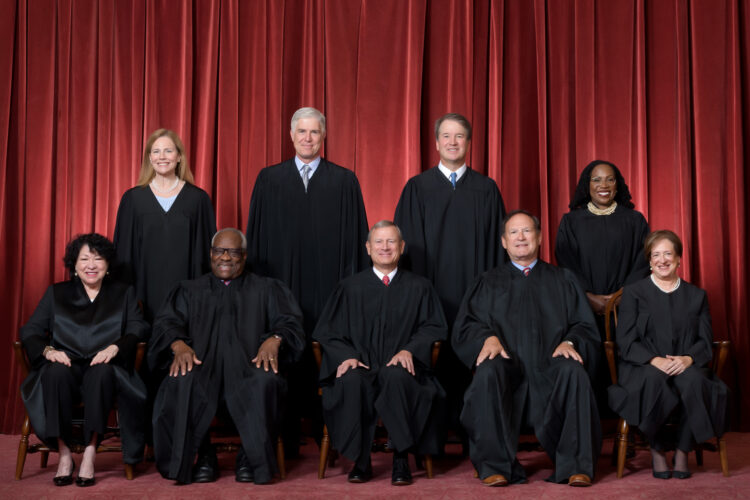
The case grew out of President Trump’s birthright-citizenship executive order, but the Court never reached that question. Justice Amy Coney Barrett’s majority opinion answered a purely procedural one instead: may a district court enjoin the government from enforcing a policy against anyone, not just the plaintiffs? The answer was no. Basically, federal courts’ equitable powers come from the Judiciary Act of 1789, which the Court (following Grupo Mexicano de Desarrollo, 1999) reads as handing out only the remedies “traditionally accorded by courts of equity” at the founding, and founding-era equity had no universal injunction. Relief must be limited to what gives the actual plaintiffs “complete relief.” Barrett’s illustration: a pregnant plaintiff receives complete relief when her child’s citizenship is protected. “Extending the injunction to cover all other similarly situated individuals would not render her relief any more complete.”
What Survived CASA?
| Remedy | Status after CASA | Seen in the NFA litigation? |
|---|---|---|
| Universal / nationwide injunction | Effectively dead — exceeds equitable authority | Why the Jensen/SSF injunction is party-limited |
| Party-specific injunction | Fully available — “complete relief” to actual plaintiffs | Yes — and it stretches to organization members and company customers, current and future |
| Class action (Rule 23) | Available — Justice Kavanaugh flagged statewide or even nationwide classes as the lawful route to broad relief | Not yet — no NFA case has sought class certification |
| APA vacatur of agency action | Expressly left open by the majority — an unresolved question | Not the vehicle here (the NFA challenge attacks statutes, not a rule) |
How CASA Shaped the NFA Suppressor Injunction
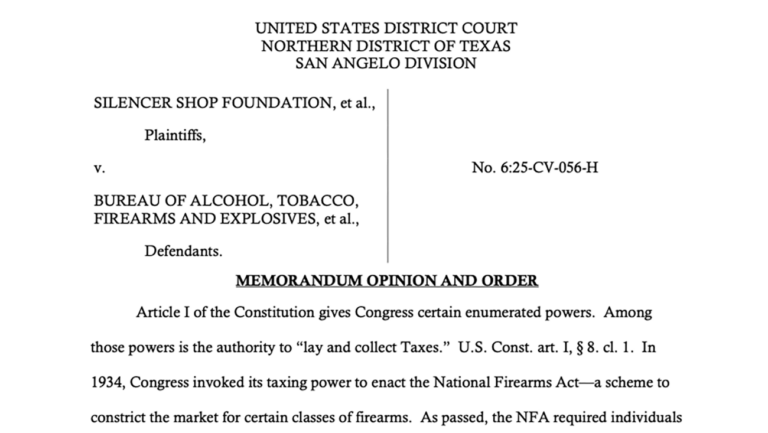
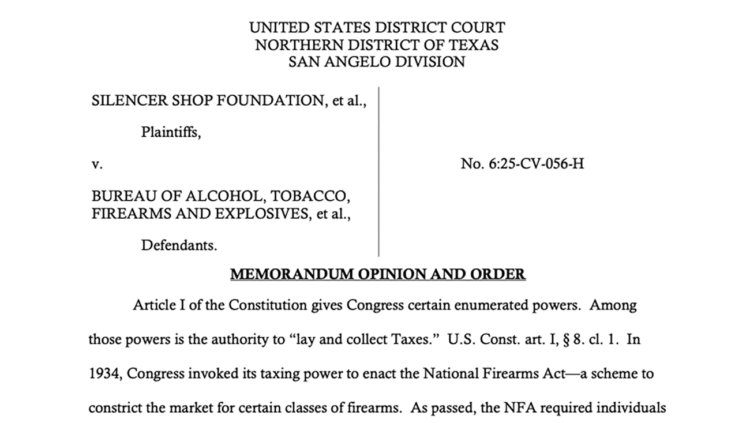
Judge Hendrix’s August 5 relief order reads like a CASA compliance exercise. Instead of “ATF may not enforce NFA registration against anyone,” the injunction runs to named parties and their people: members of Gun Owners of America, the Firearms Regulatory Accountability Coalition, TSRA, CCRKBA, and FPC’s action foundation (current and future members); customers of Silencer Shop, B&T USA, Palmetto State Armory, and SilencerCo; the individual plaintiffs; and fifteen plaintiff states, as governments, which does not blanket their residents. That is “complete relief” to the parties, CASA-style, and not an inch more. Now, the strange consequences follow directly: two neighbors in Texas can walk into the same shop and only the GOA member leaves with a no-Form-4 suppressor, and a trust may be outside coverage even when its trustee is a member, because the trust, a separate legal possessor, never joined anything.
Does Joining GOA or CCRKBA Today Actually Cover You?
The injunction’s text extends to future members, and CCRKBA’s chairman says new members are “automatically covered.” But attorneys point at the obvious asymmetry: “No court has tested a purchase by someone who joined after the ruling.” Post-CASA, coverage questions like this get settled party-by-party, most likely in enforcement actions, which is exactly the uncertainty CASA’s critics predicted and its defenders call the constitutional design working as intended. Both readings are on the table, and the honest call is that the question is wide open. Remember that before you bet a felony on a membership card.
What’s the Lawful Path to Nationwide Relief Now?
The class action, and the birthright-citizenship litigation itself proved it works. Within hours of CASA, the ACLU refiled as a class action in New Hampshire; on July 10, 2025, Judge Laplante certified a nationwide class of affected children and enjoined the executive order as to the whole class. That case reached the Supreme Court as Trump v. Barbara, and on June 30, 2026, the Court struck down the executive order on the merits (5–3–1, Chief Justice Roberts writing), nationwide protection achieved through the post-CASA playbook. No NFA plaintiff has tried the same move yet. Until one does (or until Brown and Roberts multiply the covered parties; see our circuit tracker), NFA relief stays a patchwork of memberships and receipts.
Why This Matters Beyond Guns
CASA cuts every direction. The same rule that limits the NFA injunction to plaintiff-group members also limited injunctions against the administration’s policies to the parties who sued. Whichever side of any policy fight you are on, the post-CASA reality is the same: relief follows parties, membership is standing, and organizations that litigate have become coverage vehicles. That is a structural change in how Americans relate to federal courts. For the underlying theory of the NFA ruling itself, read our companion piece on the taxing-power argument, and for the terms used here, the 2A legal glossary. Practical buying implications live at our sister site’s NFA ruling hub (Brand Avalanche network).
Three things to watch from here: any Rule 23 class attempt in the NFA cases, how the appeals courts treat the “future members” question, and the APA-vacatur question the majority saved for another day. Written from the CASA and Barbara opinions and contemporaneous reporting; membership-coverage claims are attributed to the organizations and attorneys making them.
Frequently Asked Questions
What did Trump v. CASA actually hold?
The Supreme Court held 6-3 that a district court cannot enjoin the government from enforcing a policy against anyone beyond the actual plaintiffs. Universal or “nationwide” injunctions likely exceed the equitable authority Congress gave federal courts, so relief is now generally limited to giving the actual plaintiffs “complete relief.”
Did CASA end nationwide relief entirely?
No. Party-specific injunctions are fully available and can stretch to organization members and company customers, current and future. Class actions under Rule 23 remain available too — Justice Kavanaugh flagged statewide or nationwide classes as the lawful route to broad relief. APA vacatur of agency action was expressly left open by the majority as an unresolved question.
Why does the NFA suppressor injunction only cover certain people?
Because Judge Hendrix’s August 5 relief order was written as a CASA compliance exercise. Instead of barring ATF from enforcing NFA registration against everyone, the injunction runs to the plaintiff organizations’ members and specific companies’ customers, not the general public.
What question did CASA leave unresolved?
Whether an injunction protecting an organization’s members also covers people who become members after the ruling, and whether APA vacatur of agency action can still deliver broader relief — both were expressly left open by the majority.
This article is legal news and analysis, not legal advice.
Reader Favorites
- Virginia’s Gun-Hating Governor vs. Virginia
- Los Angeles Gun-Grabbers Confused, Terrified by Bill of Rights
- Guns at Coronavirus Quarantine Protests: Listen For the Loudest Scream
- Supreme Court Second Amendment Cases: Careful What You Wish For
- Has COVID-19 Secured the Second Amendment’s Future?
- Defending the Defensive Blade: New Knife Rights App
Gun-owner reference desk
Plain-English references worth bookmarking — NFA rules, carry law, and the gear terms behind every review.
| 2026 at a glance | |
|---|---|
| NFA tax stamp | $0 |
| Permitless carry | 29 states |
| Suppressors legal | 42 states |
50+ NFA, carry and gun-law terms in plain English, updated for 2026.
Open the glossary → Network| Term | Category |
|---|---|
| Striker-fired | Action |
| MOA | Optics |
| Twist rate | Ballistics |
30 gun, ammo and optics terms, from Guns & Gadgets Daily.
View full chart →