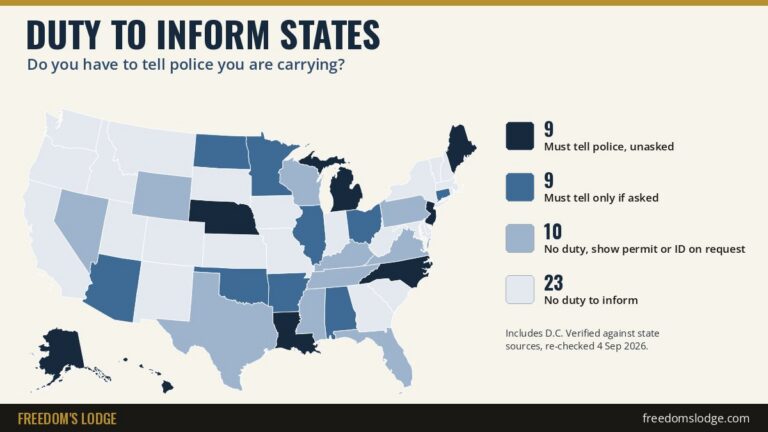
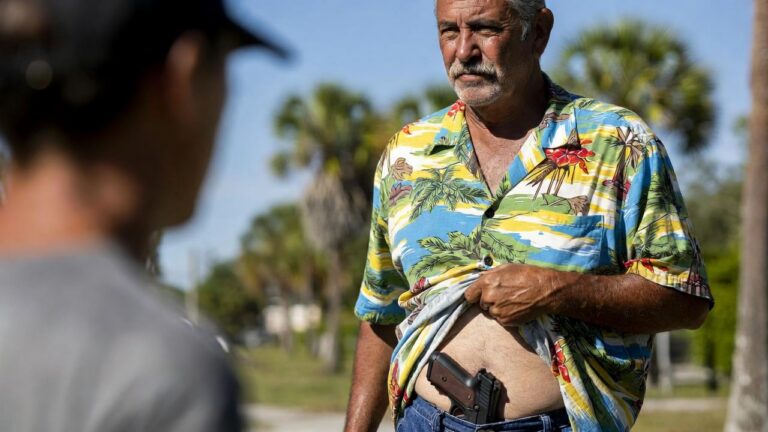
Can You Carry a Gun in a National Park? Federal Land Carry Rules, Explained (2026)

You can usually carry a gun in a national park if you follow the law of the state you are standing in, but never inside a federal building.
Last updated: October 9, 2026 · Originally published September 2, 2026
The catch is that “the park” is not one big federal bubble with its own gun rules. Since 2010, federal law has mostly gotten out of the way and pointed you back to the state you are standing in. That sounds simple until you walk into a visitor center, cross an invisible state line inside Yellowstone, or assume a national forest works the same way as a national park.
Remember this article is the field-guide version. Not a law-school briefing. Just what actually matters if you want to stay legal on federal land in 2026.
The two rules for whether you can carry a gun in a national park
There is no special federal carry permit for parks. There is also no magic “national park exception” that lets you ignore the state you drove into.
Rule one: possession follows the state.
Federal law says the National Park Service cannot ban you from possessing a firearm in a park unit if two things are true: you are not otherwise prohibited from having a gun, and your possession complies with the law of the state where that park unit sits. That statute is 54 U.S.C. § 104906. The Park Service regulation that implements it is 36 C.F.R. § 2.4.
In plain English: if you can legally carry that gun in that state either openly, concealed, with a permit, or under permitless carry then you can generally carry it the same way on the trails, roads, campgrounds, and backcountry of the park. If you cannot legally possess or carry it in that state, the park boundary does not save you.
Rule two: buildings and shooting are still federal problems.
Carry on the trail is not the same thing as carry in the gift shop. Federal law still treats visitor centers, ranger stations, administrative offices, fee booths, and other government buildings as federal facilities. Firearms are banned there under 18 U.S.C. § 930, and those buildings are supposed to be posted at public entrances. Leave the gun locked in the vehicle if you need a map, a junior ranger badge, or a bathroom in a marked federal building.
Discharge is a separate issue. You can usually carry a loaded firearm in a park. You generally cannot fire it. Park Service rules prohibit using or discharging a firearm except in narrow cases such as authorized hunting in the few park units where hunting is actually allowed. Target practice against a stump in Yosemite is not cool. It is a federal violation. Self-defense is the obvious gray area people ask about; general self-defense law still exists, but “I wanted to see if it worked” does not.
As of 2026, gun-rights groups are challenging the building ban in court, and there is also legislation aimed at it. None of that changes the rule on the ground today. Until a court or Congress actually changes it, treat the visitor center like a federal building, because that is what it is.


National parks vs. national forests vs. BLM land
Most people mash these together because they all look like “public land with a brown sign.” They are not the same agency, and they are not the same carry-and-shoot package either.
National parks (National Park Service).
These are the postcard places: Yellowstone, Grand Canyon, Great Smoky Mountains, Shenandoah. Carry follows state law. Shooting usually does not. Most national parks ban hunting entirely. A few units and some national recreation areas are different, but you should assume “carry yes, bang no” unless you have checked with that specific park. Federal buildings inside the park are still off-limits. Wildlife is not a shooting gallery, and the Park Service is not shy about saying a handgun is a poor bear plan compared with distance, food storage, and spray.
National forests (U.S. Forest Service).
National forests are the Department of Agriculture’s version of public land, and they are generally more working-land than shrine. Carry again follows state law. The Forest Service does not run a separate nationwide “no guns” rule. Hunting is common during state seasons, and recreational shooting is often allowed unless a local forest order shuts it down. The big federal limits are about where you shoot, not whether you can have the gun: no discharging within 150 yards of a residence, building, campsite, developed recreation site, or occupied area; no shooting across a Forest Service road or an adjacent body of water; no shooting into caves. Ranger stations and visitor centers are still federal facilities. Private inholdings are sprinkled through many forests, so the map matters.
BLM land (Bureau of Land Management).
BLM country is the wide-open Western default: desert, sagebrush, canyon, and a lot of “you can see tomorrow from here.” Carry and use generally follow state and local law. Most BLM land is open to hunting and recreational shooting. The usual hard stop is developed recreation sites for example campgrounds, trailheads, picnic areas, where discharging a firearm is prohibited even if the surrounding desert is legal. Local field offices can add fire restrictions, seasonal closures, or shooting closures.
A bonus mix-up worth one sentence:
U.S. Army Corps of Engineers lakes and recreation areas are a different animal and often much stricter than parks, forests, or BLM. Do not assume the park rule follows you to the Corps boat ramp.
Quick comparison:
| Land type | Who runs it | Can you carry? | Can you shoot? |
|---|---|---|---|
| National park | NPS | Usually yes, if state law allows it | Almost never, except limited authorized hunting or true self-defense |
| National forest | Forest Service | Yes, if state law allows it | Often yes, subject to the 150-yard rule, roads, water, and local orders |
| BLM land | BLM | Yes, if state law allows it | Often yes, except developed sites and local closures |

Traveling to a park in another state
Your home-state permit is not a national park pass. The park uses the host state’s rules.
If the park sits in a permitless-carry state and you meet that state’s age and eligibility rules, you can usually carry there the same way a local can. If the park sits in a permit-required state, you need a permit that state honors — either one it issued or one it recognizes through reciprocity. Open carry and concealed carry are not automatically the same question. Some states let you open carry with no permit and still require a license to conceal. The park inherits that distinction. Also check the boring stuff people skip:
- Age. Wyoming’s permitless concealed carry for nonresidents is 21. Montana and Idaho are 18. That difference matters the second you wander across a Yellowstone state line.
- Magazine limits, “assault weapon” definitions, and feature bans. The park does not wash those away.
- Vehicle carry. Some states treat a gun in a console differently from a gun on your hip.
- What counts as concealed. A jacket over a holster is not a fashion choice in every state. It is a legal category.
If you are driving through a restrictive state just to get to the park, that is a transport problem, not a park problem. The Firearm Owners’ Protection Act, 18 U.S.C. § 926A, gives a safe-passage rule for interstate travel: you must be legal at the start and legal at the destination, the gun must be unloaded, and neither the gun nor the ammo can be readily accessible from the passenger compartment. In a vehicle with no separate trunk, that means a locked container that is not the glove box or console. FOPA is a defense for transport, not a license to stop and hike armed through a state that would otherwise prohibit the carry. Overnight hotel stops and “I just ran into the gas station with it” are where people punch holes in their own protection.
Flying is simpler and less fun: unloaded firearm in a locked hard-sided case as checked baggage, declared to the airline, no gun past TSA. Then the destination state’s rules take over the second you leave the airport.
Crossing state lines inside one trip
Big parks do not care that your itinerary said “one park.” Several of them sit on state lines, and the law changes depending where you are physically standing.
Yellowstone is the classic example. About 96 percent of the park is in Wyoming, with smaller slices in Montana and Idaho. All three states currently allow permitless carry, so this is not the nightmare it used to be. It is still not identical. Wyoming’s permitless concealed-carry age for nonresidents is 21. Montana and Idaho start at 18. An 18-year-old who is legal on the Montana side is not automatically legal the moment the trail dips into Wyoming. Open carry is broadly legal in all three, but you still have to know which dirt you are standing on. The Park Service has said the same thing for years: in big backcountry parks, it is on you to know the state line.
Great Smoky Mountains is the other poster child. The park straddles Tennessee and North Carolina. Those two states do not run the same carry system. Tennessee has permitless carry. North Carolina generally allows open carry without a permit but still requires a permit for concealed carry. You do not get to pick the friendlier statute and apply it to the whole park. If you are on the North Carolina side, North Carolina rules control. If you are on the Tennessee side, Tennessee rules control. The state line does not come with a PA announcement.
Other multi-state units work the same way: Death Valley (California and Nevada), the Appalachian Trail’s NPS-managed stretches, and a pile of smaller parks and historic sites. The NPS official line is blunt. You cannot choose which state’s laws to follow. You follow the state you are physically in. If that state recognizes your out-of-state permit, the park recognizes it too. If it does not, the park does not invent reciprocity for you.
Practical move: before the trip, look at the park map and the state line, not just the entrance station. If your hike, drive, or horseback loop crosses a border, plan the stricter set of rules for that stretch or change how the gun is carried before you cross. Our concealed carry reciprocity map lets you check any state in a couple of taps before you go.

How to carry legally on federal land: a checklist
- Have a plan for the vehicle when you go inside a building. “I’ll just tuck it under the seat for a minute” is how easy trips become expensive stories.
- Confirm you can legally possess the firearm under federal law. A park trail does not rehabilitate a prohibited person.
- Look up the current carry law for the state the land sits in: permitless or permit, open or concealed, age, vehicle rules, magazine and feature limits.
- If the park or forest crosses a state line, check both states and mark the boundary on your map.
- If you need a permit in that state, bring the physical permit and ID. Reciprocity is a state-to-state question, not a “I have a card somewhere” question.
- Leave the gun out of federal buildings: visitor centers, ranger stations, offices, many fee booths, and posted facilities. Lock it in the vehicle first.
- Do not shoot in a national park unless that specific unit authorizes hunting and you are doing it under those rules. Carry is not a range pass.
- On Forest Service or BLM land, add the location rules: 150 yards from developed sites in forests, no shooting at developed BLM recreation sites, no shooting across roads, and check local fire or shooting closures.
- If you are only passing through a hostile state on the way to a legal destination, unload and store the gun the FOPA way before you cross the line.
- Read the park’s own firearms page and superintendent’s compendium. The national rule is the floor. Local postings still matter.
Common mistakes when you carry a gun in a national park
Thinking the park has one rule. It has the state’s rule, plus federal building law, plus a discharge ban. That is three rules wearing one hat.
Walking into the visitor center still armed. This is the most common unforced error. The trail was legal. The lobby is not. Signs are supposed to be there. Do not make a ranger explain 18 U.S.C. § 930 over a rack of postcards.
Confusing parks with forests. People hear “federal land” and assume they can plink cans anywhere with a pine tree on it. In a national park, that assumption is how you collect a federal citation. In a national forest or on BLM land, shooting may be legal, just not next to the campground.
Ignoring the state line inside the park. Yellowstone and the Smokies are not unique because they are famous. They are unique because you can change legal systems without changing destinations. Age limits and concealed-carry rules are the details that bite.
Treating a carry permit like a hunting license. They are not related. Most parks do not allow hunting. Where hunting is allowed on federal land, you still need the state’s hunting license, season, and method rules.
Assuming FOPA covers the hike. Safe passage is for transport from legal place A to legal place B with the gun put away. It is not a roaming carry permit for every rest stop, scenic overlook, and sandwich shop in between.
Forgetting the gun is still a gun. Brandishing, negligent handling, drinking with it, leaving it unsecured in a tent, or firing a “warning shot” at a curious bison are not clever loopholes. They are how a legal carry turns into a very different conversation.
Skipping the specific park page. National rules get you 80 percent of the way there. The last 20 percent is that one historic building, that one posted facility, or that one California quirk that makes Sequoia a different problem from Grand Teton.
The working idea for 2026 is the same idea that has been in place since February 22, 2010: the park generally lets you do what the state lets you do, then draws a hard line at federal buildings and at pulling the trigger. If you treat state law as the real rulebook, keep the gun out of the visitor center, and know which state your boots are in, you are already ahead of most of the internet arguments about this.
This is general information, not legal advice. Laws change, parks sit in more than one state, and the only permit that never expires is the habit of checking before you go.
Hunters running suppressed rigs on public land have an extra layer to think about, since suppressor and hearing-protection rules ride on top of the carry rules. Our sister team at Popular Suppressors tracks the NFA side of hunting gear, and the Popular Outdoorsman crew covers public-land hunting seasons in depth. For the concealed-carry setup itself, Guns & Gadgets Daily runs the gear side.
Frequently asked questions
Can you carry a concealed firearm in a national park?
Yes, if concealed carry is legal for you under the law of the state where the park is located. Since 2010, national parks follow state carry law for possession. You still cannot carry inside marked federal buildings within the park, such as visitor centers and ranger stations.
Can you carry a gun in a national forest?
Generally yes. National forests are managed for multiple use, including hunting, and carry follows state law. National forests also have far fewer federal buildings than parks, so the building ban rarely comes up. Always confirm the specific state’s rules first.
Is it legal to carry a gun into a park visitor center?
No. Federal law prohibits firearms inside federal facilities, and visitor centers, ranger stations, and park offices qualify. These buildings are posted with signs at the entrance. Secure your firearm before entering. Pending legislation could change this, but the ban is in force today.
Do I need a permit to carry on federal land?
It depends on the state the land sits in. Federal land defers to state carry law, so if the state requires a permit to carry, you need one there; if the state has permitless carry, you generally do not. Out-of-state visitors should confirm reciprocity before traveling.
Can you hunt on federal land with a firearm?
On national forests and BLM land, yes, hunting is generally allowed under state law and seasons. In national parks, hunting is generally prohibited except where a specific park unit expressly permits it. Check the individual unit’s rules before you go.
Can you discharge a firearm in a national park?
Generally no. Legal possession does not mean legal use. Target shooting and discharging a firearm are prohibited in most national parks outside of lawful hunting areas where hunting is expressly allowed.
Federal land belongs to you as much as anyone, but the rules that come with it do not read themselves. Learn the state standard, respect the posted buildings, and the map of where you can lawfully carry gets a lot simpler than the internet makes it sound.
James Nicholas is a firearms writer and photographer covering Second Amendment law and policy for Freedom’s Lodge.

Reader Favorites
- Virginia’s Gun-Hating Governor vs. Virginia
- Los Angeles Gun-Grabbers Confused, Terrified by Bill of Rights
- Why Do Anti-Gunners Love Red Flag Laws So Much?
- Gun Companies Fight to End COVID-19; Gun Grabbers Fight to End THEM
- Sunshine State Showdown: “No Guns Under 21” Law Challenge Moves Forward
- Guns at Coronavirus Quarantine Protests: Listen For the Loudest Scream
Gun-owner reference desk
Plain-English references worth bookmarking — NFA rules, carry law, and the gear terms behind every review.
| 2026 at a glance | |
|---|---|
| NFA tax stamp | $0 |
| Permitless carry | 29 states |
| Suppressors legal | 42 states |
50+ NFA, carry and gun-law terms in plain English, updated for 2026.
Open the glossary → Network| Term | Category |
|---|---|
| Striker-fired | Action |
| MOA | Optics |
| Twist rate | Ballistics |
30 gun, ammo and optics terms, from Guns & Gadgets Daily.
View full chart →