Traveling With High-Capacity Magazines
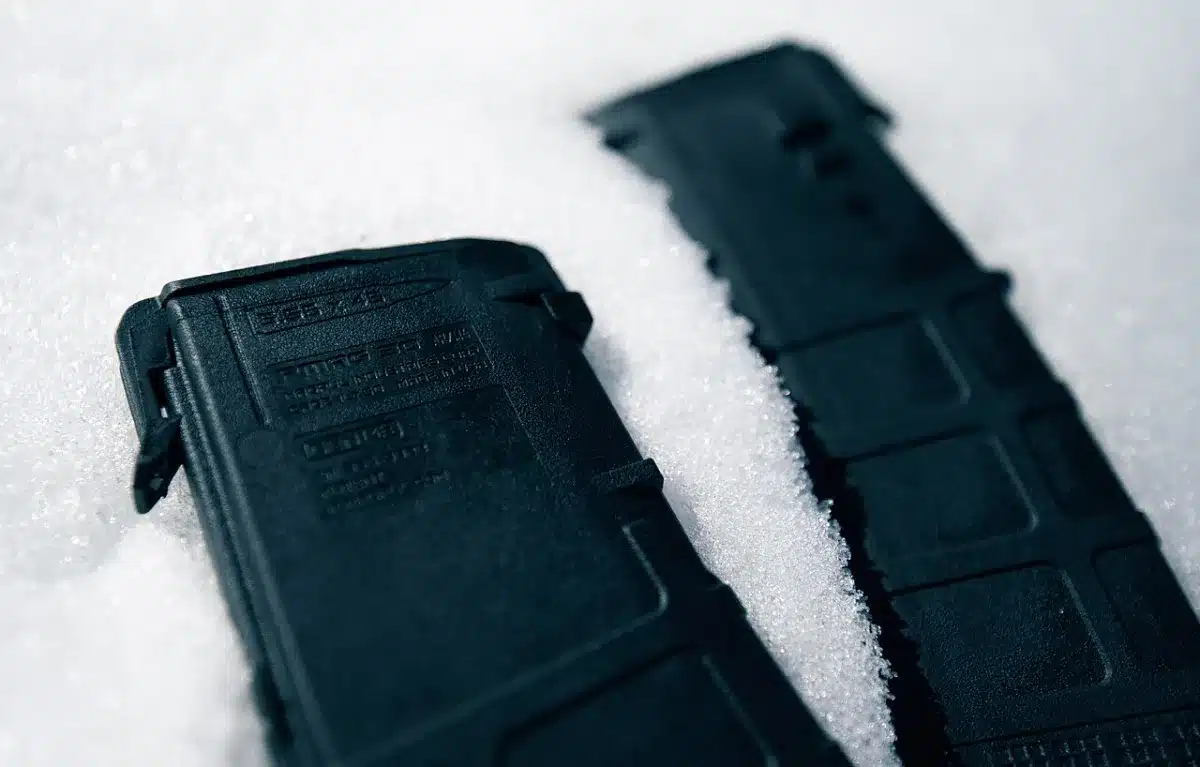
Last updated: September 10, 2026 · Originally published September 9, 2026
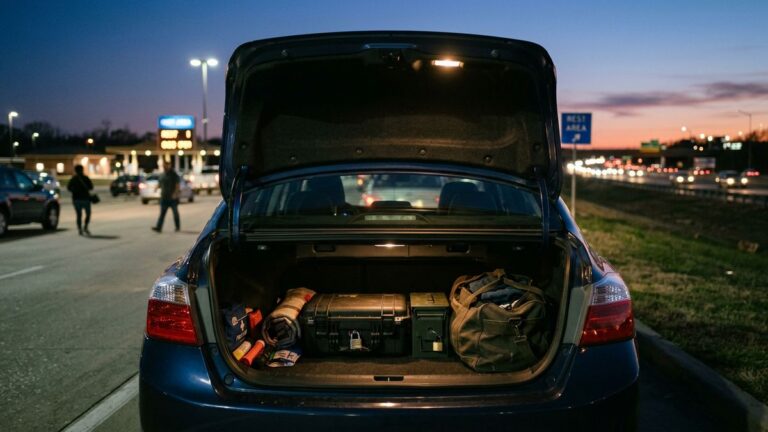
You load a 15-round magazine into your range bag, drive four hours to a match, and cross two state lines doing it. Whether you committed a felony depends entirely on which lines you crossed.
Sixteen jurisdictions cap magazine capacity — 15 states and the District of Columbia — and 35 do not. Three of the 16 are on the books but not enforceable today. The limit is 10 rounds in most restricted states, 15 in Colorado, and 17 in Delaware. Now, what differs even more than the number is what the law reaches: possession, sale, or manufacture. I sell magazines for a living, and that verb is the whole ballgame.
The Sixteen That Can Turn a Drive Into a Felony
This is the route-planning version. For the statute behind each one, the test it uses, and whether it reaches possession or only sale, see the full magazine capacity limits by state reference.
Fifteen states and D.C. restrict magazine capacity. The table below reflects statutes on the books as of September 3, 2026, including which conduct each state criminalizes.
| State | Limit | What the law reaches | Notes |
|---|---|---|---|
| California | 10 | Possession, sale, manufacture | Duncan v. Bonta pending at the Supreme Court |
| Colorado | 15 | Sale, transfer, manufacture | Magazines owned before July 2013 may be kept |
| Connecticut | 10 | Possession, sale | Pre-ban magazines required registration; NAGR v. Lamont pending |
| Delaware | 17 | Possession, sale | Highest cap of any restricted state |
| Hawaii | 10 | Handgun magazines only | Rifle magazines are not capped |
| Illinois | 10 long gun / 15 handgun | Sale, purchase, possession | Grandfather clause for pre-2023 owners; Barnett v. Raoul upheld the law |
| Maryland | 10 | Manufacture, sale, transfer | Simple possession is not an offense |
| Massachusetts | 10 | Possession, sale | Magazines made before September 1994 are exempt |
| New Jersey | 10 | Possession, sale | Struck down in Cheeseman, but stayed August 4, 2026 — still enforceable |
| New York | 10 | Possession, sale | |
| Oregon | 10 | Not enforced | Measure 114 permanently enjoined by state court in December 2025 |
| Rhode Island | 10 | Possession, sale | |
| Vermont | 10 long gun / 15 handgun | Possession, sale, transfer, manufacture | Grandfather clause covers possession of magazines acquired before April 2018 |
| Virginia | 15 | Sale, transfer, purchase, import | Possession is not an offense; cap enjoined and not enforced since July 2026 |
| Washington | 10 | Manufacture, sale, distribution | Possession stays legal; Gator’s Custom Guns pending |
| District of Columbia | 10 | Possession, sale |
The other 35 states place no cap on magazine capacity. Neither does federal law. The 1994 federal ban expired in 2004 and Congress has not renewed it.


Possession Versus Sale, and Why It Decides Your Route
This is the distinction that matters most when you are only driving through. A state that bans the sale of a 30-round magazine has not made it an offense to have one in your trunk. A state that bans possession has. Three of the sixteen sit in the first group: Maryland, Virginia and Washington. Every other capped jurisdiction — California, Colorado, Connecticut, Delaware, the District of Columbia, Hawaii, Illinois, Massachusetts, New Jersey, New York, Oregon, Rhode Island and Vermont — bans possession outright. Vermont is the one that catches people, because its grandfather clause covers possession by Vermonters and does nothing for you driving in from New Hampshire.
Most coverage reports a number and stops. The number is the least useful part.
Maryland, Virginia, and Washington restrict commerce, not ownership. A Washington resident who owned 30-round magazines before the ban may keep them, carry them to the range, and use them. What that resident cannot do is buy another one in state.
California, New Jersey, New York, and D.C. reach possession itself. In those states the magazine in your safe is the offense, regardless of when or where you bought it.
Colorado and Illinois sit in between with grandfather clauses. Colorado protects magazines owned before July 1, 2013. Illinois protects magazines owned before its 2023 law, subject to its endorsement requirements.
Read the verb in the statute before you read the number. Possession, sale, transfer, manufacture, and distribution are five different words, and states use them on purpose.

On the Books but Blocked
Three states have caps that courts have stopped.
Oregon. Measure 114 passed narrowly in November 2022 and never took effect as to magazines. A state court permanently enjoined the capacity provision in December 2025. Standard-capacity magazines remain lawful in Oregon.
New Jersey. The Third Circuit struck down the state’s ban en banc on July 17, 2026 in Cheeseman v. Davenport. The court then granted New Jersey a stay on August 4. The practical result is strange: the ruling says the ban is unconstitutional, and the ban is still enforceable while the state petitions the Supreme Court. I covered that decision in detail when it came down in our breakdown of the Third Circuit ruling.
Virginia belongs in the same conversation. A federal judge blocked Virginia’s ban statewide this summer, keeping the state out of the restricted column for now.
Remember, enjoined is not repealed. An appellate court can put any of these laws back on short notice, which is why a date-stamped answer matters more here than in most areas of gun law.
What the Supreme Court Could Do
Three magazine petitions sit at the Supreme Court right now, and the justices act on them at their September 28 long conference.
Duncan v. Bonta challenges California’s cap. Gator’s Custom Guns v. Washington challenges Washington’s commercial ban. NAGR v. Lamont challenges Connecticut’s combined rifle and magazine law. I laid out the full docket and what each outcome would mean in our guide to the September 28 long conference.
Separately, the Court already granted Viramontes v. Cook County in June to decide whether AR-15-platform rifles are protected arms. That case is the pillar the magazine question leans on, and I explained its stakes in our analysis of the Supreme Court taking up the assault weapons ban.
A ruling for the challengers on either question would reach the caps in the table above. A ruling the other way leaves the current map intact. Either way, nothing in your state changed this week.
The Federal Law That Does Not Save You
Here is the part almost nobody prints. The federal safe-passage provision, 18 U.S.C. § 926A, protects transport of a lawfully owned firearm between two places where you may legally possess it. It has never been held to protect the magazine.
A federal court settled that in 1990 and it has not moved since. In Coalition of New Jersey Sportsmen v. Florio, 744 F. Supp. 602 (D.N.J. 1990), the court dismissed the interstate-transport claim outright, holding that § 926A does not preempt New Jersey’s magazine restriction and gives a traveller no shield against a state charge for possessing a banned magazine. The section protects the gun. The magazine is on its own.
Now, remember what that means in a traffic stop. New York and New Jersey officers have arrested people who were in full compliance with § 926A, and the burden of proving that compliance lands on you, in that state, after the arrest. Being right is not the same as not being handcuffed.
Practical guidance from that reality:
- Plan the route, not just the destination. A drive from Pennsylvania to Maine passes through New York. The destination being legal does not make the transit legal.
- Keep magazines unloaded and separate from the firearm in any restricted state you cross.
- Do not rely on reciprocity. Carry reciprocity covers permits, not magazines. Our companion guide to how concealed carry reciprocity works state by state explains why the two systems are unrelated.
- Leave restricted-state magazines at home. The cheapest compliance strategy is a dedicated 10-round magazine set for travel. Trust me, a few ten-rounders are cheaper than a lawyer.
Hunters cross more state lines than most gun owners. Our sister site Popular Outdoorsman covers the same problem from the field in its hunter and traveler reciprocity guide.
How Magazine Rules Ride Along With Other State Law
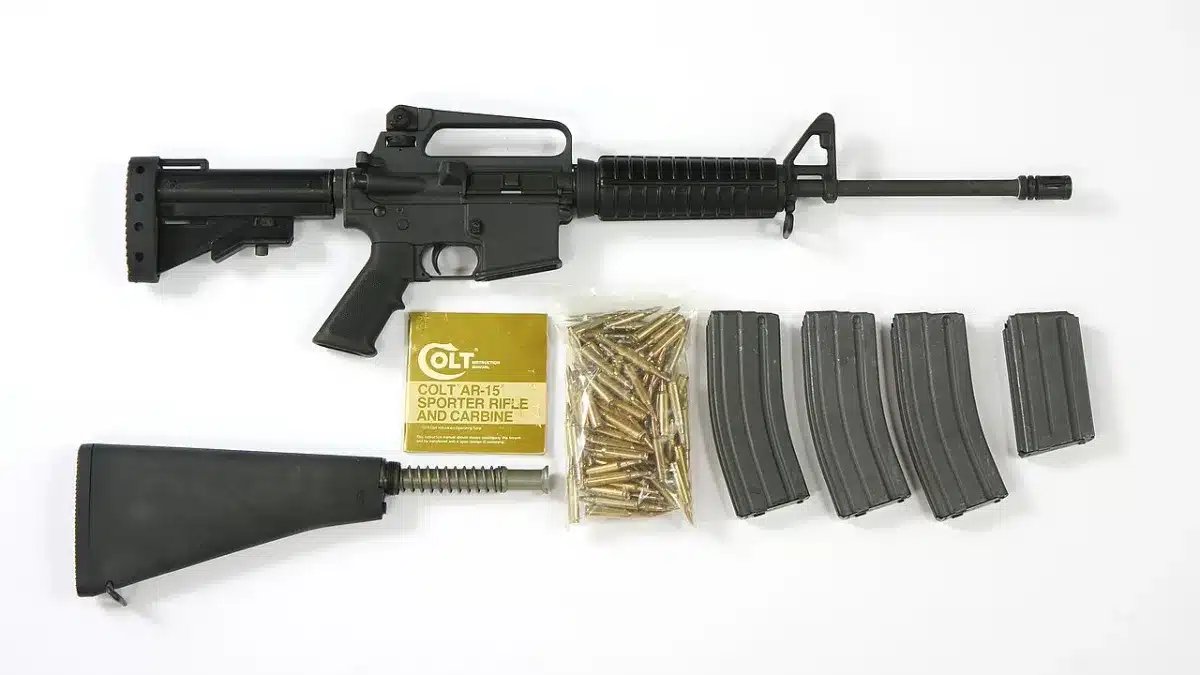
Magazine caps rarely travel alone. States that limit capacity usually also regulate the rifle, the receiver, and the transfer.
Illinois, New Jersey, New York, Connecticut, California, and Maryland each pair a magazine cap with a semiautomatic rifle restriction. That pairing is exactly why NAGR v. Lamont presents both questions together, and why a rifle-only ruling in Viramontes would leave half the problem standing.
Component rules add another layer. Guns & Gadgets Daily walked through the federal side of that in its coverage of the 80 percent lower ruling and who it protects. On the NFA side, Popular Suppressors keeps a parallel breakdown of state suppressor laws after the NFA ruling, which follows the same state-by-state structure.
Frequently Asked Questions
How many states limit magazine capacity in 2026?
Fifteen states and the District of Columbia: California, Colorado, Connecticut, Delaware, Hawaii, Illinois, Maryland, Massachusetts, New Jersey, New York, Oregon, Rhode Island, Vermont, Virginia and Washington. Three of them — Maryland, Virginia and Washington — reach selling and transferring without making it an offense to own one you already have, which matters a great deal if you are only passing through. Count Oregon with an asterisk, since its cap is permanently enjoined and nobody is enforcing it.
Which state has the highest magazine capacity limit?
Delaware, at 17 rounds, with Colorado next at 15. Illinois and Vermont also allow 15 for handgun magazines. Everybody else on the restricted list stops at 10, and Hawaii only applies its 10 to handgun magazines.
Can I own a 30-round magazine in Washington or Maryland?
Yes, if you already have it. Washington bans making, selling, and distributing magazines over 10 rounds but never made owning one a crime, and Maryland works the same way for manufacture, sale, and transfer. Keep what you lawfully acquired and use it; just do not expect to buy a fresh one across the counter in either state.
What happens if I drive through a restricted state with legal magazines?
You are leaning on 18 U.S.C. § 926A, the federal safe-passage rule, and courts have been uneven about whether it covers magazines, so do not bet the trip on it. Unloaded, stored apart from the firearm, out of reach from the driver’s seat, and when the map allows it, drive around the restricted state.
Are grandfathered magazines legal everywhere they were bought?
No. A grandfather clause belongs to the state that wrote it. A magazine that is fine in Colorado under the 2013 exemption is contraband the moment it crosses into California, and moving to a possession-ban state does not bring the exemption with you.
Moving to a State With Restrictions
Relocation is where most gun owners get caught, because the magazines were lawful the day they were purchased and become unlawful the day the moving truck arrives.
Grandfather clauses protect people who already lived in the state when the law passed. They do not protect new arrivals. Colorado’s pre-2013 exemption belongs to Colorado residents who owned those magazines then. Illinois’s exemption works the same way. Showing up in 2026 with a box of 30-round magazines puts you outside every one of these clauses.
Four options exist, and only the first three are lawful in a possession-ban state:
- Leave them behind. Store magazines with family or in a licensed facility in a state where you may lawfully possess them. Storage does not transfer ownership.
- Sell before you move. A private sale completed in the origin state, to a resident of that state, avoids the problem entirely.
- Convert or replace. Compliant magazines are cheap. Permanent modification kits exist for some patterns, but rules on what counts as permanent vary, so confirm the standard your new state applies.
- Bring them anyway. This is the felony option. It is also the one people choose by accident, by not thinking about the range bag in the back of the truck.
Commerce-only states change this math. Moving to Washington, Maryland, or Virginia with lawfully owned magazines is legal, because those states never criminalized possession. Moving to California, New Jersey, New York, Connecticut, Massachusetts, Rhode Island, or D.C. with the same magazines is not.
Check the rule before you sign the lease, not after. The offense in a possession state is complete the moment the property crosses the line.
Final Thoughts
Thirty-five states treat a 30-round magazine as a piece of stamped metal. Fifteen states and a federal district treat the same object as contraband, or as something you may keep but never replace.
Three of those fifteen are asking the Supreme Court to settle it, and nine justices decide whether to listen on September 28. Until then the map is the law, and the map is drawn at the state line.
Sources: Limits and enforcement scope were compiled from state statutes and current litigation records, then cross-checked against the Supreme Court’s public docket for Duncan (No. 25-198), Gator’s Custom Guns (No. 25-153), and NAGR v. Lamont (No. 25-421), verified September 3, 2026. Where a statute is enjoined, I report the enforcement status rather than the text alone.
This article is general information, not legal advice. Magazine laws change through legislation and litigation, sometimes within days. Confirm your own state’s current rule with your state attorney general’s office — for example, the California Attorney General’s firearms division or the Washington State Attorney General — or with an attorney licensed in your state before acting.

Reader Favorites
- Virginia’s Gun-Hating Governor vs. Virginia
- Los Angeles Gun-Grabbers Confused, Terrified by Bill of Rights
- Why Do Anti-Gunners Love Red Flag Laws So Much?
- Gun Companies Fight to End COVID-19; Gun Grabbers Fight to End THEM
- Sunshine State Showdown: “No Guns Under 21” Law Challenge Moves Forward
- Guns at Coronavirus Quarantine Protests: Listen For the Loudest Scream
Gun-owner reference desk
Plain-English references worth bookmarking — NFA rules, carry law, and the gear terms behind every review.
| 2026 at a glance | |
|---|---|
| NFA tax stamp | $0 |
| Permitless carry | 29 states |
| Suppressors legal | 42 states |
50+ NFA, carry and gun-law terms in plain English, updated for 2026.
Open the glossary → Network| Term | Category |
|---|---|
| Striker-fired | Action |
| MOA | Optics |
| Twist rate | Ballistics |
30 gun, ammo and optics terms, from Guns & Gadgets Daily.
View full chart →