Second Amendment News This Week: AR-15 Case Gets a Date
The Second Amendment news this week finally put a date on the calendar: the Supreme Court set December 2 for argument in the consolidated AR-15 ban cases, and the Justice Department filed a brief telling the justices those bans are unconstitutional. Meanwhile, in the same week, a federal appeals court upheld NFA registration for silencers, Missouri’s attorney general sued the ATF to end it, August’s background-check data showed NFA transfers running at triple last year’s pace, and a long-haul trucker asked the Court to make carry permits work across state lines. Here are the five stories that matter, what each one actually decided, and what happens next.
Last updated: October 9, 2026 · Originally published September 14, 2026
The week at a glance
| Date | What happened | Why it matters |
|---|---|---|
| Sept. 1 | Third Circuit decides U.S. v. Berger | A federal appeals court says NFA silencer registration is not an infringement |
| Sept. 4 | SCOTUS sets Dec. 2 for the consolidated AR-15 cases | The biggest Second Amendment argument since Bruen has a date |
| Sept. 4 | Justice Department files an amicus brief backing the challengers | The United States tells the Court that AR-15 bans violate the Second Amendment |
| Sept. 8 | August NICS figures published: NFA checks up 201.6% | Suppressor and short-barrel demand is running at triple last year’s rate |
| Sept. 8 | Missouri sues ATF in Marshak v. ATF | A state attorney general asks a court to end NFA registration outright |
The Supreme Court set a date, and the Justice Department picked a side
The Court scheduled one hour of argument for Wednesday, December 2 at 10 a.m. in the consolidated cases of Viramontes v. Cook County, No. 25-238, and Grant v. Higgins, No. 25-566. Notably, the question is the one lower courts have split on since Bruen: whether the Second and Fourteenth Amendments protect possession of AR-15-platform and similar semiautomatic rifles. We covered the cert grant in our full breakdown of the assault weapons ban cases.
The bigger development is who showed up. On September 4 the Solicitor General filed a 40-page amicus brief for the United States, signed by Solicitor General John D. Sauer along with Assistant Attorneys General Harmeet Dhillon and Brett Schumate. Notably, its position is not hedged. The brief notes that AR-15s are lawful at the federal level and in 40 states, that the overwhelming majority of owners keep them for home defense, hunting and target shooting, and concludes that a ban on possessing such rifles violates the Second Amendment.
Moreover, the government is not alone on that side of the docket. Attorneys general from 27 states filed in support of the challengers. So did major firearms and gun-rights organizations, industry groups and academics — including Yale constitutional scholar Akhil Reed Amar, who filed in support of neither party but urged the Court to reverse the decision below. Law-enforcement groups and the U.S. Conference of Catholic Bishops filed as well, per the Second Amendment Foundation’s weekly judicial report.
What it means for you: nothing changes on December 2 itself. In fact, a ruling is not expected until the end of the term, most likely June or July 2027. But the questions the justices ask in that hour will be the first real read on whether roughly a dozen state and local hardware bans survive — and for the first time in this fight, the federal government is arguing on the same side as the gun owners.
A federal appeals court just upheld suppressor registration
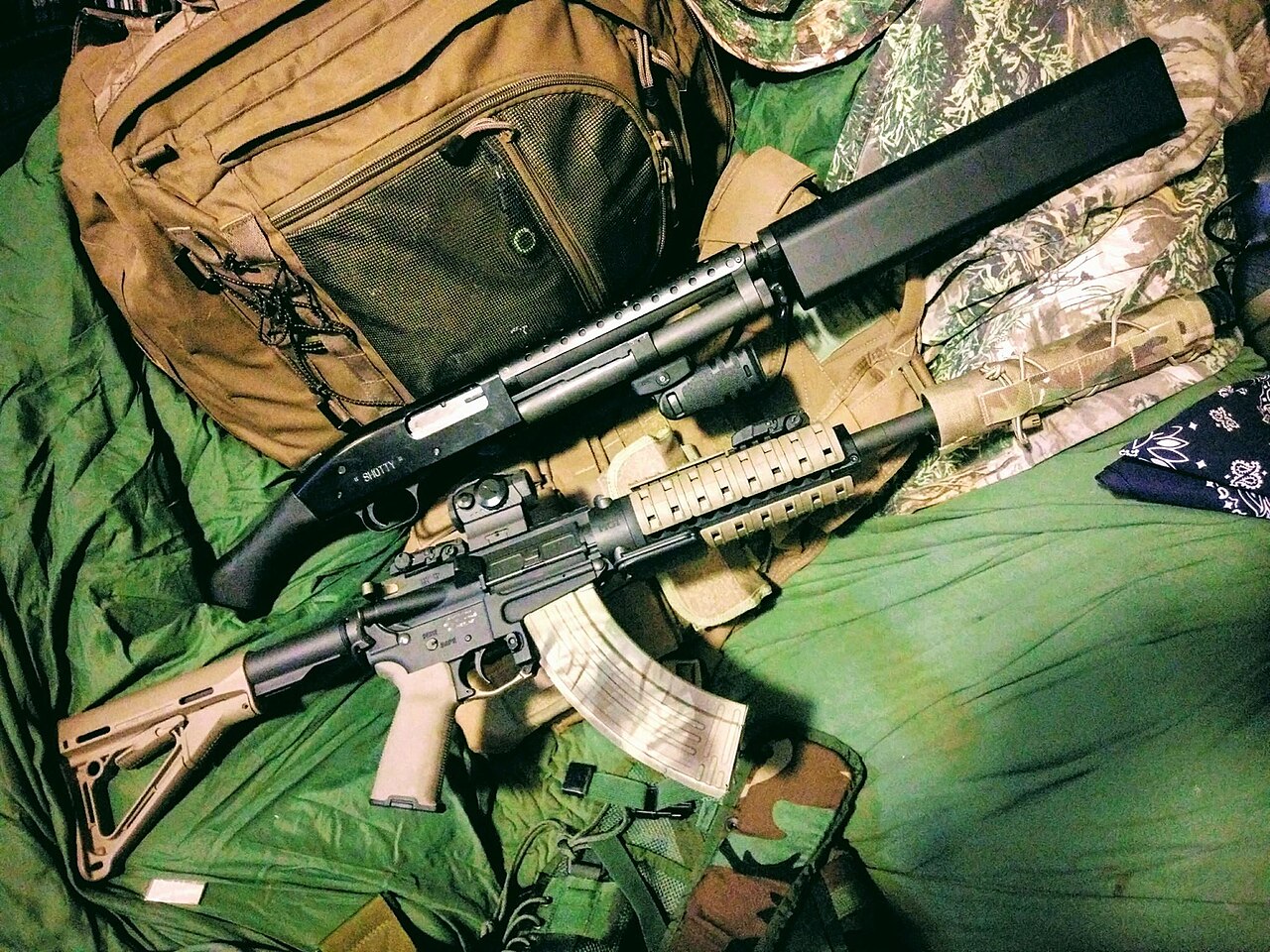
On September 1 a Third Circuit panel decided United States v. Berger, No. 24-2125, and it is the most consequential suppressor ruling of the year in the wrong direction for owners. Judge Stephanos Bibas, joined by Judge Felipe Restrepo, held that machine guns are not protected arms — they are “dangerous and unusual,” not commonly used for lawful purposes — and that the federal ban therefore stands.
However, the part that reaches ordinary suppressor buyers is the second half. The panel held that the NFA’s silencer-registration requirement does not infringe the Second Amendment at all, because it is a “minimal, objective” condition on buying and selling rather than a restriction on keeping or bearing. That is because, in the court’s reading, submitting fingerprints, a photograph and an application, notifying local law enforcement and serializing the item is a shall-issue licensing regime of the kind Bruen expressly declined to disturb. Judge Cindy Chung concurred in the judgment but pointedly did not join that reasoning, writing that she sees tension between it and the Supreme Court’s rejection of interest balancing, and would have wanted full briefing before deciding that a minimal burden fails step one. Eugene Volokh has the key passages.
Now set that beside what happened in Texas five weeks ago. In Jensen v. ATF and Silencer Shop Foundation v. ATF, Judge James Wesley Hendrix held on August 5 that once Congress zeroed the making and transfer tax, the registration machinery lost its taxing-power foundation entirely — and the government let the injunction take effect rather than seek a further stay. In short: two federal courts, two irreconcilable answers to the same question about the same item. That is the shape of a case the Supreme Court eventually has to take. Our guide to SBR ownership under the 2026 NFA changes walks through where the paperwork stands today.
Missouri sued the ATF to end suppressor and SBR registration

On September 8, Missouri Attorney General Catherine Hanaway sued the ATF and the Justice Department, asking the U.S. District Court for the Eastern District of Missouri to end NFA registration for suppressors, short-barreled rifles, short-barreled shotguns and “any other weapons.” The case is Marshak v. ATF; Hanaway is joined by Dave Marshak, a resident of Festus.
In practice, the complaint runs on two tracks. The first is structural and mirrors the Texas reasoning. In Sonzinsky v. United States (1937) the Supreme Court upheld the NFA as a revenue measure — registration, fingerprints and prior approval existed to collect the tax. Section 70436 of the One Big Beautiful Bill Act set that tax at zero for those four categories effective January 1, 2026. By contrast, machine guns and destructive devices still carry the $200 tax; the four untaxed categories do not. Missouri’s position is that a registry with no tax behind it is a national firearms database Congress was never given the power to build, carrying felony exposure of up to ten years and $250,000 with no revenue left to collect.
Meanwhile, the second track is the Second Amendment claim, and it turns the agency’s own numbers against it: roughly 6.65 million registered suppressors and 1.23 million registered SBRs. Because they are owned in those quantities, the state argues, cannot be the “dangerous and unusual” weapons that fall outside the Amendment. Colonial gunpowder-storage rules, the complaint says, existed to keep towns from burning down — not to build a fingerprint-backed federal permission system.
What it means for you: nothing yet. Missouri is asking for a declaratory judgment and a permanent injunction, and the case is at the complaint stage. Instead, the practical significance is venue. The Texas injunction protects the plaintiff organizations’ members and customers; this one puts the question in front of an Eighth Circuit district court with a state attorney general as a named plaintiff, which is a harder posture for the government to moot away.
NFA background checks tripled in August
The National Shooting Sports Foundation’s adjusted NICS figure for August 2026 came in at 1,115,410, up 2.2 percent from August 2025. Similarly, the unadjusted FBI number, 1,917,379, was up 10 percent. Those are steady, unremarkable numbers.
However, the NFA line is not. NSSF reported 185,744 NFA checks in August, against 61,594 in August 2025 — an increase of 201.6 percent. Three times the volume, year over year. In addition, this is not a one-month spike: NFA checks were up 177 percent in June and had more than doubled in July.
For that matter, the reading is straightforward. Congress zeroed the $200 tax on suppressors and short-barrel firearms effective January 1, and hundreds of thousands of Americans who had been priced out or put off by the stamp are now in the system. Therefore it also explains why the registration question in Berger, Jensen and Marshak is not academic. The category of people directly affected by how those cases come out is growing by roughly 185,000 transactions a month.
Can your carry permit cross a state line?
Jeffrey Johnson is a long-haul trucker who holds carry licenses from Florida and Georgia and drives through Minnesota regularly. Minnesota recognizes permits from 33 states; neither of his made the list, so state law requires him to unload his handgun and case it at the border. Even so, the Eighth Circuit ruled against him last May, reasoning that a reciprocity statute “does not regulate arms-bearing conduct” — it merely creates an exemption from a permitting process Johnson concedes is itself constitutional.
His cert petition, Johnson v. Jacobson, No. 26-255, argues that Minnesota’s licensing statute and its reciprocity statute are separate laws that each independently decide whether he may bear arms, and that the Eighth Circuit’s framing makes the Second Amendment the only enumerated right a state can switch off based on which sister state issued the paperwork. For context, the Liberty Justice Center represents him. The petition is set for the justices’ September 28 long conference, alongside the held-over magazine cases.
What it means for you: a cert grant here would be the first Supreme Court test of whether carry rights travel. A denial leaves the current patchwork intact — which, for anyone who drives for a living or crosses state lines with a firearm, is the difference between one permit and a folder full of them. Jacob Sullum has the full breakdown, including a parallel Massachusetts “suitability” case the state’s high court hears October 7.
Also this week
President Trump granted full and unconditional pardons on September 4 to Navy veteran Patrick “Tate” Adamiak and to George Peterson, both convicted in ATF prosecutions. Specifically, Adamiak had served more than four years of a 20-year sentence in a case built on inert, drilled-out RPG tubes. We covered the pardons and what they do and do not change in our full report on the NFA pardons.
In addition, two more filings are worth tracking. On September 2 the Fifth Circuit heard argument in Elite Precision Customs v. ATF, the Firearms Policy Coalition’s challenge to the federal rule barring a dealer from transferring a handgun directly to an out-of-state resident. And on September 1 the FPC filed Pool v. Besson in the Western District of Louisiana, challenging that state’s refusal to issue carry permits to 18-to-20-year-old adults — the same under-21 question that has been splitting courts all year. For the rest of the docket, see last week’s roundup.
A three-way tie: a third of you rate your state top tier, a third call it pretty restrictive, and a third would move.
Second Amendment news this week: frequently asked questions
When will the Supreme Court hear the AR-15 ban cases?
Oral argument in the consolidated cases of Viramontes v. Cook County (No. 25-238) and Grant v. Higgins (No. 25-566) is set for Wednesday, December 2, 2026, at 10 a.m., with one hour allotted. A decision is not expected until the end of the term, most likely June or July 2027.
Do I still have to register a suppressor under the NFA in 2026?
For most buyers, yes. The $200 making and transfer tax on suppressors, short-barreled rifles, short-barreled shotguns and AOWs was eliminated effective January 1, 2026, but the Form 4 registration process itself remains on the books. A Texas federal court enjoined enforcement against the plaintiff organizations’ members and customers in August 2026, and the Third Circuit reached the opposite conclusion on September 1, so the answer now depends on where you are and who you belong to. Ask your dealer what they are willing to transfer.
What did the Third Circuit decide in United States v. Berger?
On September 1, 2026, a Third Circuit panel held that machine guns are not arms protected by the Second Amendment because they are not in common use for lawful purposes, and that the National Firearms Act’s silencer-registration requirement is a minimal, objective condition on buying and selling rather than an infringement. Judge Chung concurred in the judgment but declined to join the silencer reasoning.
What is Missouri’s lawsuit against the ATF about?
In Marshak v. ATF, filed September 8, 2026, in the Eastern District of Missouri, Attorney General Catherine Hanaway asks the court to end NFA registration for suppressors, SBRs, SBSs and AOWs. The state argues that the registry was upheld in 1937 only as a way to collect the NFA tax, and that once Congress set that tax at zero, Congress had no remaining power to require registration.
Does my concealed carry permit work in every state?
No. Recognition is set state by state, and some states recognize only a subset of out-of-state permits. Minnesota, for example, recognizes permits from 33 states but not Florida or Georgia. The pending Supreme Court petition in Johnson v. Jacobson, No. 26-255, asks whether the Second Amendment requires broader reciprocity; it is scheduled for the justices’ September 28, 2026, long conference.
The Second Amendment news this week came down to five stories, and every one of them is a piece of the same argument: what counts as an arm, and what a government may demand before you keep one. The Supreme Court will start answering the first question on December 2. The second is being fought out one district court at a time. We will cover each as it moves.
By James Nicholas · September 10, 2026
Related: Read our explainer on the ATF eZ Check rule and faster FFL transfers.
Reader Favorites
- Supreme Court Takes Up the “Assault Weapons” Ban — What It Means for Your AR-15 and Your Rights
- What To Do With Inherited Guns: A Calm, Legal 2026 Guide
- Second Amendment News This Week: 5 Stories That Matter
- New Jersey’s Assault Weapons Ban Struck Down: What the Third Circuit Ruling Means (2026)
- Second Amendment News: New Jersey’s AR-15 Ban Struck Down (July 2026)
- Virginia Assault Weapons Ban Blocked Statewide: What the Injunction Means
Gun-owner reference desk
Plain-English references worth bookmarking — NFA rules, carry law, and the gear terms behind every review.
| 2026 at a glance | |
|---|---|
| NFA tax stamp | $0 |
| Permitless carry | 29 states |
| Suppressors legal | 42 states |
50+ NFA, carry and gun-law terms in plain English, updated for 2026.
Open the glossary → Network| Term | Category |
|---|---|
| Striker-fired | Action |
| MOA | Optics |
| Twist rate | Ballistics |
30 gun, ammo and optics terms, from Guns & Gadgets Daily.
View full chart →